 William BensonVIEW PROFILE →
A New Kind of Service Academy: Inside Trump's Order to Build the US Space Academy
Announced alongside medals for the Artemis II crew, the new academy is being built to do for space what West Point does for the Army.
Announced alongside medals for the Artemis II crew, the new academy is being built to do for space what West Point does for the Army.
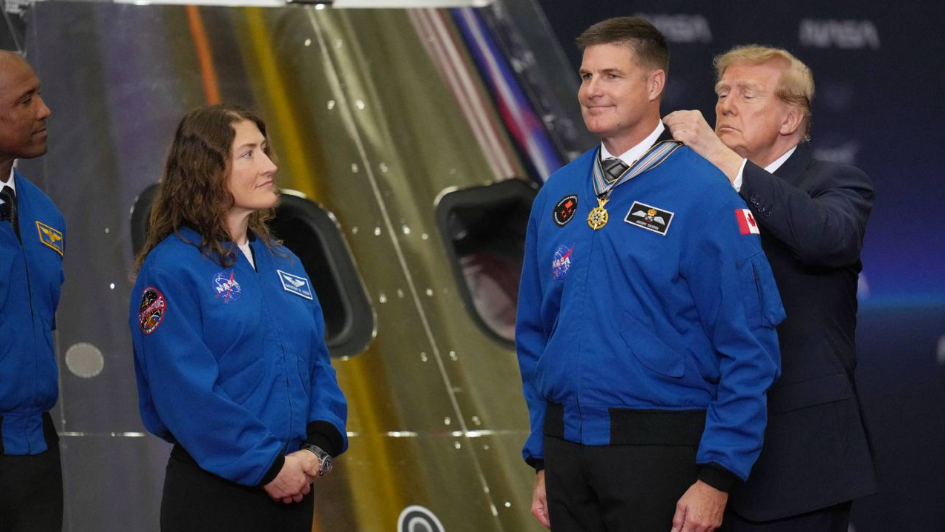
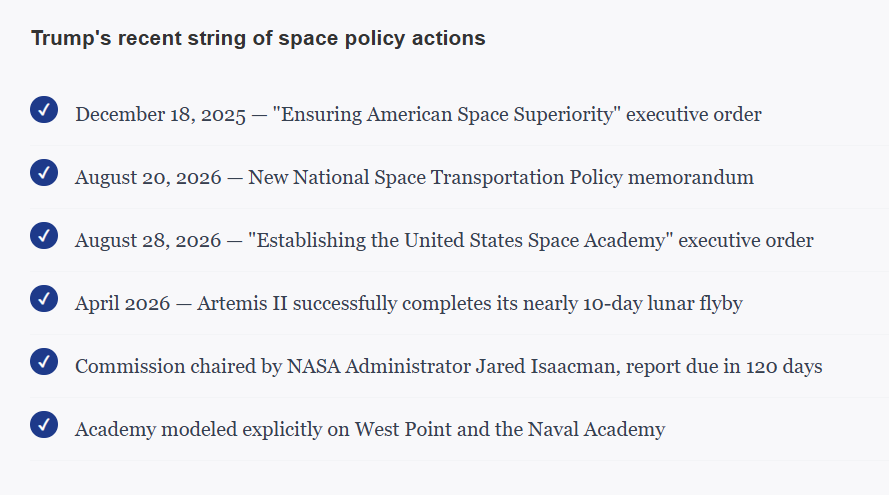
Friday at NASA's Johnson Space Center wasn't a normal day at the office. President Trump stood in front of the crew that had just flown farther from Earth than any humans in history, pinned the nation's highest civilian space honor on all four of them, and then, almost as an aside, announced he was signing an executive order to build something the country has genuinely never had before: a full-fledged federal academy dedicated entirely to space. If you've been half-following the Artemis program and wondering where all of this is actually headed, this is the moment worth catching up on. What Actually Happened at Johnson Space Center On Friday, August 28, 2026, President Trump signed an executive order titled "Establishing the United States Space Academy," kicking off the formal process to create the nation's first federal academy built specifically around space. The signing happened during a ceremony at NASA's Johnson Space Center in Houston, where Trump also awarded the Congressional Space Medal of Honor, the country's highest civilian award for spaceflight achievement, first given to Neil Armstrong back in 1978, to all four members of the Artemis II crew: NASA astronauts Reid Wiseman, Victor Glover, and Christina Koch, along with Canadian Space Agency astronaut Jeremy Hansen. Trump didn't hold back on ambition while describing the new institution. He compared it directly to the US Naval Academy at Annapolis and the US Military Academy at West Point, two of the country's most prestigious service academies, and made clear he intends the Space Academy to carry the same weight. "It's got to be top line," he said, adding that even architecturally, "it's going to be beautiful... it's going to be as good as it can get."
What the US Space Academy Will Actually Be
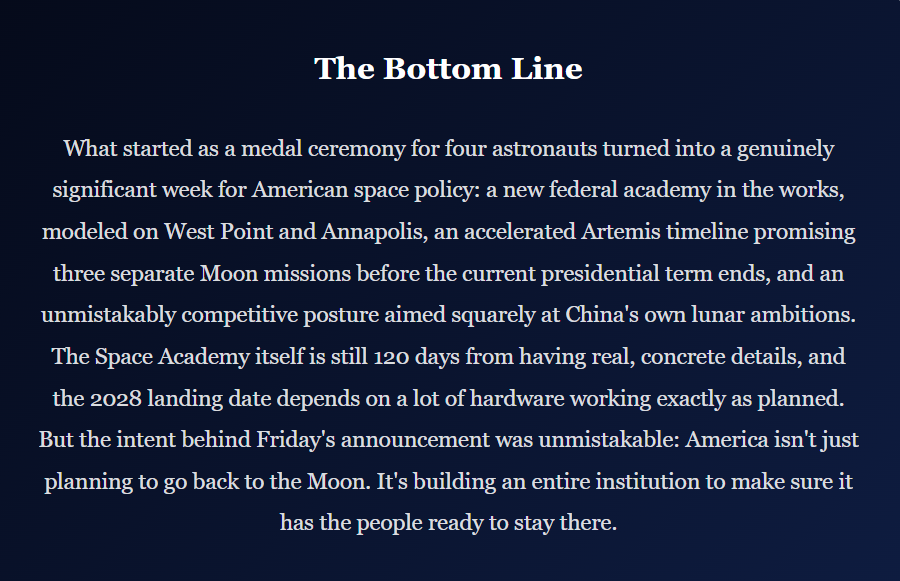
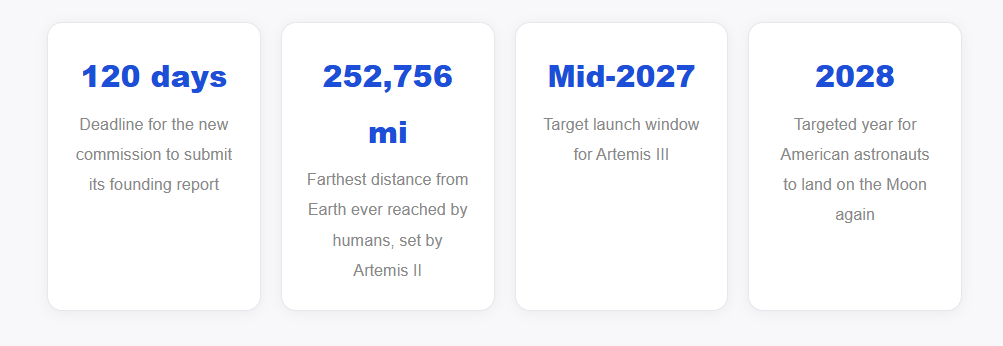
Here's the important nuance most headlines skip past: Friday's order doesn't open the academy's doors tomorrow. It establishes the Presidential Commission on the United States Space Academy, chaired by NASA Administrator Jared Isaacman, tasked with advising and assisting the President on how to actually build the thing. That commission has 120 days from the signing to submit a formal report proposing the academy's key details, structure, curriculum, and, eventually, location.
What is already clear is the intent behind it. The White House describes the proposed institution as a NASA-led federal academy combining rigorous technical education with leadership development, discipline, and what officials called "a durable commitment to public service," aiming to produce a "professional corps of civically grounded leaders" ready to advance American interests in space. In plainer terms, it's designed to train engineers, operators, and future service members for careers spanning NASA, the US Space Force, and the broader commercial space industry, not unlike how Annapolis and West Point feed officers into the Navy and Army.
The Artemis II Crew Finally Gets Its Due
The medal ceremony itself capped off a genuinely historic year for NASA. The Artemis II crew launched aboard the Orion spacecraft on April 1, 2026, and spent nearly ten days looping around the Moon before splashing down safely in the Pacific Ocean on April 10, marking the first crewed lunar mission in over fifty years. Unlike the Apollo missions of the 1960s and 70s, Artemis II didn't touch down on the lunar surface, its job was to test the systems and trajectory that will make a future landing possible, but its crew still traveled 252,756 miles from Earth, farther than any human beings in history, further even than the Apollo astronauts ever went.
Trump was visibly moved recounting the mission during his remarks, describing being pulled out of an important meeting because someone wanted to watch the Artemis broadcast live. "I was at a very important meeting with the biggest people in the country," he recalled telling the room. "And somebody said, 'I'd like to watch Artemis.' I said, 'You would?'" It's a small, human detail, but it captures something real about how much cultural attention this mission actually pulled off in April, cutting through news cycles usually dominated by everything except space exploration.
Why This Is Happening Right Now: The Race Nobody's Ignoring
None of this is happening in a geopolitical vacuum, and NASA officials haven't been shy about saying so directly. Isaacman confirmed in the days before the ceremony that NASA had blocked an attempted Chinese cyberattack on the agency's systems, and connected the incident explicitly to the broader competitive picture: China is targeting the same landing site NASA has set its sights on, the Moon's south pole, drawn by the same resource, subsurface water ice that could eventually be converted into breathable air and rocket fuel for missions further into the solar system.
"They're a very capable rival in this space race," Isaacman said of China's lunar ambitions. "We are not taking the foot off the gas." He added, of the administration's broader space policy, "If we're doing our job right... we will be successful beating them in this second space race."
That competitive framing runs directly through the new academy's mission statement too. The White House's own fact sheet ties the institution's founding to America's broader interests in the space domain, treating it not as an educational nicety but as a genuine piece of national strategy, training the specific pipeline of people the country will need as its space ambitions accelerate.
The Artemis Timeline Just Got a Lot More Aggressive
Perhaps the most consequential detail buried underneath Friday's academy announcement is just how fast NASA now plans to move. Isaacman announced that Artemis III, IV, and V will all launch before the end of Trump's second term, an extraordinarily compressed timeline compared to the pace of the program under the previous administration, which completed just one uncrewed test flight during its tenure. "We did not stretch out our timeline or delay anything," Isaacman told Fox News Digital. "What we did is insert additional missions, standardized, so we can actually achieve the national policy that President Trump set out to return American astronauts to the Moon, and build an enduring presence to stay."
Artemis III is now targeted for mid-2027, adding a new docking mission where the Orion capsule links up with a commercial lunar lander, built by either SpaceX or Blue Origin, before a landing attempt. NASA is aiming to actually put astronauts back on the lunar surface, for the first time since Apollo 17 in 1972, as early as 2028. Blue Origin suffered a real setback in May 2026 when its New Glenn rocket, expected to help carry the Blue Moon lander, exploded during a propulsion test at Cape Canaveral, with the company promising a replacement vehicle by 2027. Isaacman has stayed publicly confident regardless, saying at a recent Cape Canaveral event that the Artemis III rocket is "being stacked right now" in the Vehicle Assembly Building.
Beyond the Moon: Nuclear Power and a Mars Horizon
The ambitions on display this week reach further than the lunar surface. Just before Artemis II's launch, Isaacman announced NASA is building an experimental nuclear reactor-powered spacecraft, intended to launch toward Mars by the end of 2028, a significant step toward eventual crewed Mars missions further down the road. NASA's broader moon base concept, unveiled in detail back in May 2026, envisions a facility sprawling across hundreds of square miles at the lunar south pole, complete with a permanent power grid by the early 2030s and, eventually, specialized habitats capable of supporting astronauts for extended stays.
Moon base program executive Carlos Garcia-Galan described the long-term vision in blunt, almost territorial terms: markers at the base's perimeter, nicknamed MoonFall, meant to signal a lasting American presence while remaining respectful of other nations' nearby spacecraft and equipment. "We'll be able to say, 'Hey, we're permanently here and we're not giving it up,'" he said.
A Few Honest Questions People Are Actually Asking
Where will the US Space Academy actually be located? That hasn't been decided yet. Trump said during the signing ceremony that he'd be choosing the location "very shortly," but the formal decision will come out of the 120-day commission process led by Isaacman.
Will the Space Academy be a military institution like West Point, or civilian like a regular university? It appears to be something of a hybrid. Reporting describes it as training people for the US Space Force, NASA, and the civilian commercial space industry all at once, blending military-style discipline and leadership development with technical, engineering-focused education.
Is the 2028 Moon landing date realistic given recent setbacks like the Blue Origin rocket explosion? NASA officials have publicly maintained the timeline is achievable, though it depends heavily on SpaceX's and Blue Origin's lander programs both recovering on schedule, a genuine risk factor independent observers are watching closely.
What This Actually Means for the Next Generation
Strip away the political theater and the ambitious rhetoric, and what's left is a genuinely significant, concrete opportunity taking shape for young Americans interested in space, engineering, and technology. A federal academy on the scale of West Point or Annapolis, but built entirely around space, represents a real, structured pathway into an industry that's expanding faster than almost any other sector of American technology and defense right now, spanning NASA's own missions, the rapidly growing US Space Force, and a commercial space industry that includes SpaceX, Blue Origin, and dozens of smaller companies all competing and hiring simultaneously.
Whether the academy ends up looking exactly like the vision described this week, and whether Artemis III, IV, and V actually launch on the compressed schedule NASA has laid out, remains to be seen. Ambitious government timelines have a well-documented habit of slipping. But the direction of travel, more missions, more urgency, and now, a dedicated pipeline specifically built to train the people who'll carry this program forward, is about as clear a signal as Washington sends.
A note on this reporting
Details in this piece reflect official statements from NASA, the White House, and reporting from Bloomberg, Fox News, NBC News, Al Jazeera, and Space.com as of August 28-29, 2026. The Space Academy remains in an early planning phase, with key details, including its eventual location, still pending the commission's 120-day report.