 William BensonVIEW PROFILE →
Puerto Rico's Water Just Ran Out, and Nobody Knows When It's Coming Back
A drought so severe it broke a 120-year rainfall record has pushed San Juan into strict rationing, and the crisis runs a lot deeper than a lack of rain.
A drought so severe it broke a 120-year rainfall record has pushed San Juan into strict rationing, and the crisis runs a lot deeper than a lack of rain.
A drought so severe it broke a 120-year rainfall record has pushed San Juan into strict rationing, and the crisis runs a lot deeper than a lack of rain.
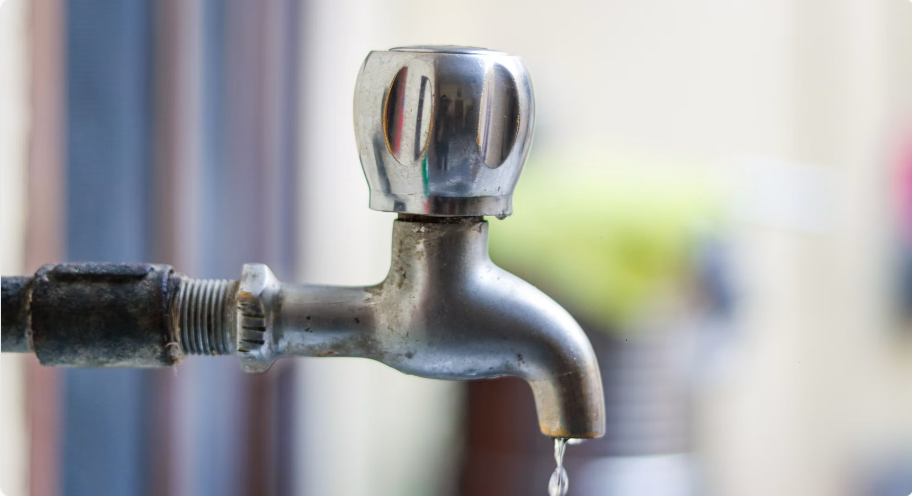
Picture this: you wake up, turn the tap, and nothing comes out. Not a trickle, not a drip. Nothing. And you already know it's going to stay that way for the next two full days. That's not a hypothetical anymore for more than half a million people living across San Juan and six neighboring municipalities in Puerto Rico. It's just Tuesday. Or Thursday. Whatever day the rotation happens to land on.
The island's water utility flipped the switch on a strict 48-hours-on, 48-hours-off rationing schedule in early August 2026, and officials have been blunt about one thing: they genuinely don't know when it'll end. What's driving this isn't just a rough patch of dry weather. It's the collision of a historic drought with a water system that's been quietly falling apart for years, and residents are the ones left holding empty buckets while everyone else figures out what to do about it.
How Bad Is the Drought, Actually?
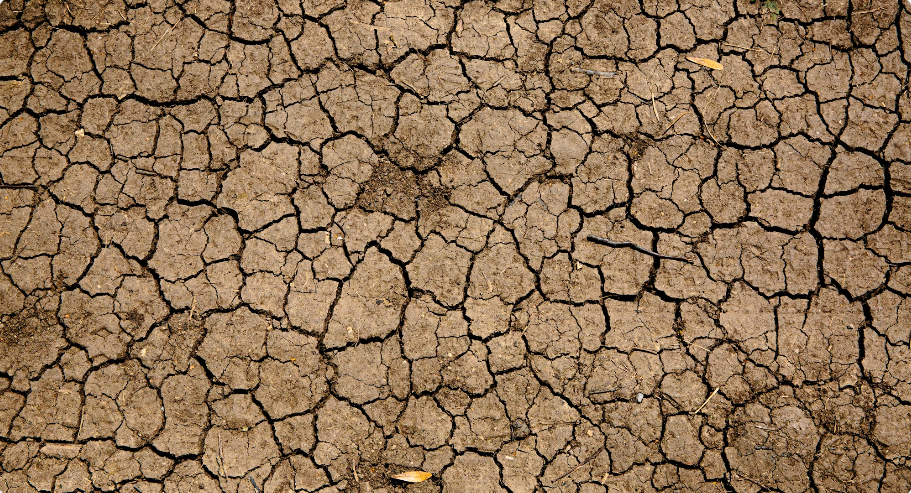
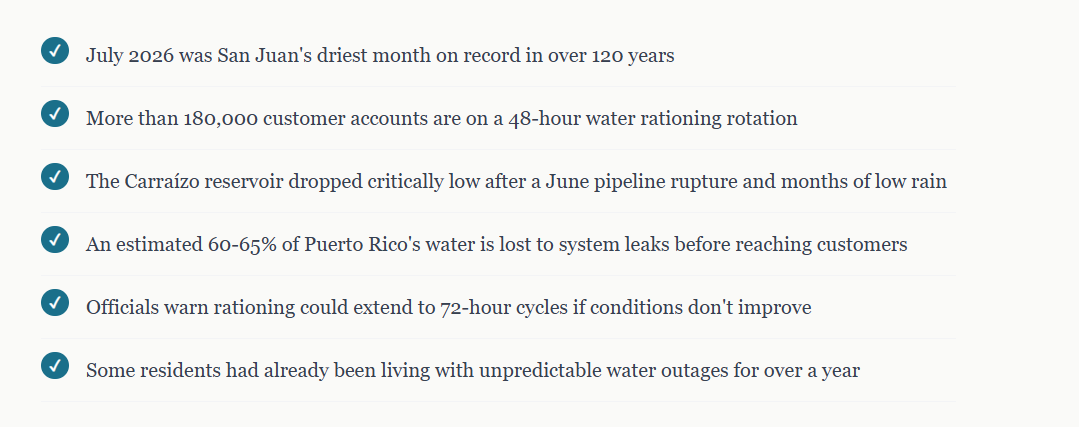
The numbers behind this crisis are the kind that make meteorologists sit up straight. July 2026 was the driest month ever recorded in San Juan in more than 120 years of weather records, and it was also the second hottest July the capital has ever logged. That's an unusual, punishing combination: extreme heat accelerating evaporation at the exact moment rainfall essentially disappeared.
Roughly a quarter of Puerto Rico is currently classified as being in severe drought, with another third of the island sitting in moderate drought conditions, according to the U.S. Drought Monitor. Forecasters aren't offering much comfort either. Rainfall over the following two to three weeks was projected to run at least 50 percent below average, with dry conditions expected to persist into September as a strengthening El Niño pattern continues suppressing rain across the Caribbean.
The Governor's Blunt Warning
Puerto Rico Governor Jenniffer González-Colón didn't sugarcoat the situation when she addressed reporters ahead of the rationing taking effect. She said officials had rarely seen the island's reservoirs so severely depleted, and warned plainly that if conditions continued on their current path, the island would simply run out of water. She later described the situation as being out of the government's hands, attributing it directly to the ongoing weather pattern.
That kind of language, a sitting governor essentially saying "we could run out of water," is rare, and it underscores just how close the situation had gotten before rationing began. The trigger point was the Carraízo reservoir, one of the key water sources serving San Juan and its surrounding communities, dropping to critically low levels following a June pipeline rupture layered on top of months of below-average rainfall.
"We've rarely seen our reservoirs so depleted, and if we continue this way, we will run out of water." — Jenniffer González-Colón, Governor of Puerto Rico
The Schedule Nobody Wanted to Live By
Starting the first Friday of August 2026, more than 180,000 customer accounts, representing well over half a million residents once every household member is counted, began rotating through a strict 48-hour cycle: two full days with running water, followed by two full days with none. The rationing hit parts of San Juan directly, along with the surrounding municipalities of Carolina, Juncos, Gurabo, Trujillo Alto, Canóvanas, and Loíza.
Officials haven't offered residents much certainty about how long this will last. The rationing is expected to run at least through the end of August 2026, but the water utility, PRASA, has explicitly warned it could extend the shutoff windows even further, potentially stretching to 72 hours at a stretch if reservoir levels don't recover.
The Part of This Story That's Not About the Weather
Here's the detail that changes how you should think about this entire crisis: an estimated 60 to 65 percent of the water flowing through Puerto Rico's system never actually reaches a customer's tap in a billable, usable way. It's lost to aging pipe leaks and unaccounted-for system losses before it ever gets where it's supposed to go. That figure isn't a rounding error, it's the majority of the water entering the system, disappearing before anyone gets to use it.
Framed that way, this drought isn't purely a story about a lack of rain, it's a story about a water infrastructure system that was already operating with razor-thin margins, and a severe drought simply removed whatever cushion existed. A system losing roughly two-thirds of its water to leaks has almost no ability to absorb a genuine supply shock, which is exactly what's playing out right now.
Why fixing leaks isn't a quick solution
Puerto Rico's water utility, PRASA, has been operating under significant fiscal strain for years, restructuring billions in debt and, according to past reporting, suspending capital improvement projects, including reservoir dredging, as a result. Repairing a system losing over half its water to leaks requires massive, sustained infrastructure investment, not something that can be fixed in the middle of an active drought emergency.
What Life Actually Looks Like Right Now
For residents living through the rotation, the disruption goes well beyond an inconvenience. NPR spoke with San Juan resident Dhara Rivera, who lives in a neighborhood where taps first started running dry more than 13 months before this latest rationing even began. She and her neighbors have been keeping a running count: 123 interrupted days without water over the course of a single year, well before the current 48-hour schedule was even introduced.
Rivera described spending a significant amount of time simply checking her faucet to see whether anything comes out, and said not knowing when water will or won't be available has reshaped how she plans her entire life. Water, she pointed out, isn't optional, it's essential for herself, her neighbours, her pets, and the island as a whole, and living without a predictable supply has taken a genuine emotional toll.
How families are coping day to day
Without reliable running water, households across the affected area have turned to water tanker trucks and storage tanks to get through the dry stretches, lining up to fill jugs, buckets, and any available container during the 48-hour windows when supply returns. It's a routine that echoes coping strategies residents used following past droughts and Hurricane Maria, repurposed once again for this latest crisis.
A pattern with painful history
This isn't the first time Puerto Rico has faced severe water rationing, and that history adds weight to the current crisis. Past droughts, including a severe episode roughly a decade earlier, forced similarly strict rationing schedules and left residents relying on the same coping mechanisms: stored water in every available container, careful conservation, and long waits at distribution points. Damage to reservoir infrastructure from Hurricane Maria in 2017 also contributed to earlier rationing periods, a reminder that the island's water system has been absorbing repeated shocks for years without ever fully recovering the resilience it lost.
What Happens From Here
With El Niño conditions strengthening and forecasters not projecting meaningful rainfall relief in the near term, the immediate outlook for Puerto Rico's reservoirs remains uncertain at best. Officials have not committed to an end date for the current rationing measures, and have been explicit that the situation could worsen before it improves, with longer shutoff windows remaining a real possibility if reservoir levels keep falling.
Longer term, the crisis has reignited pressure on Puerto Rico's government to finally address the structural problems underlying the water system itself, the leaks, the deferred maintenance, the fiscal constraints that have limited infrastructure investment for years. Whether this drought becomes the moment that finally forces sustained investment in fixing those root causes, rather than just another emergency response to get through, remains very much an open question.






