 William BensonVIEW PROFILE →
Elon Musk's Future Plans, His Wildest Net Worth Swing Yet, and the Creative Bets He's Making Right Now
For about four days in the middle of June 2026, Elon Musk was worth more than a trillion dollars — the first person in recorded history to hit that number. Then, almost as fast as it arrived, a big chunk of it evaporated. If you only remember one thing about Musk's 2026, it should probably be that: a fortune large enough to buy Ford, GM, Rivian, and Toyota combined, moving up and down by hundreds of billions of dollars in a matter of weeks. The money story is wild on its own. What's happening underneath it — the robots, the rockets, the AI models — is arguably the more interesting part.
The Wildest Six Weeks in the History of Personal Wealth
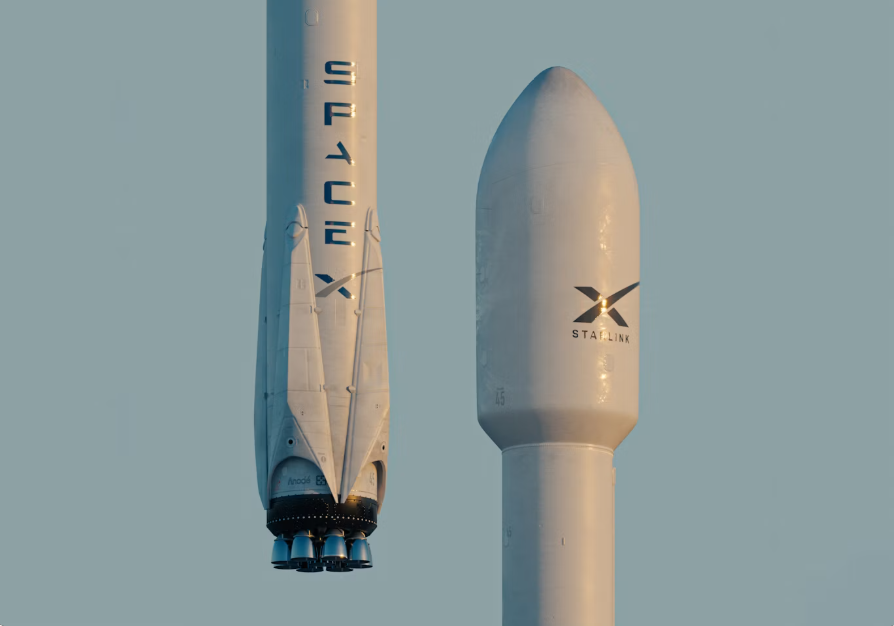
On June 12, 2026, SpaceX finally went public. The stock opened trading at a valuation close to $2 trillion, and because Musk owns roughly 38 to 43 percent of the company between shares and options, his personal net worth crossed the $1 trillion mark within hours. It was, by every major tracker's estimate, a first in human history.
The celebration didn't last long. SpaceX's stock kept climbing for a few more days, briefly pushing Musk's paper wealth to an eye-watering $1.45 trillion on June 16, before gravity took over. Shares sank more than 30 percent over the following weeks, and by late June his fortune had slipped back under a trillion. July was worse: SpaceX stock fell another 37 percent, wiping out roughly $320 billion of Musk's wealth in a single month — more, on its own, than the entire net worth of the world's next nine richest people combined.
Where things stand right now depends on which tracker you check, and that's not a dodge — it's genuinely how volatile this has become. Forbes had him around $690 billion at the start of August. Bloomberg's live index has bounced between the mid-$700 billions and the high $800 billions in the same stretch. What everyone agrees on is the direction of travel: Musk is no longer a trillionaire, at least for now, though a modest rebound in SpaceX's stock could put him back over the line almost overnight.
Where the Money Actually Comes From
Almost none of Musk's fortune sits in a bank account. It's tied up in equity — mainly his stake in SpaceX, which merged with his AI company xAI in February 2026 in a deal that valued the combined business at roughly $1.25 trillion at the time. That merger is worth understanding, because it's the clearest window into how Musk actually thinks about his companies: not as separate businesses, but as interlocking pieces of one long-term project.
His Tesla holding, sitting at around 11 to 12 percent of the company plus a large block of stock options, adds another few hundred billion depending on where the share price lands that week. A Delaware court fight over Musk's 2018 performance-based pay package — voided once, restored on appeal — has also shaped how much of that Tesla stock actually counts toward his net worth at any given moment, since large portions remain legally restricted.
The Robot Army: Optimus, Digital Optimus, and "Macrohard"
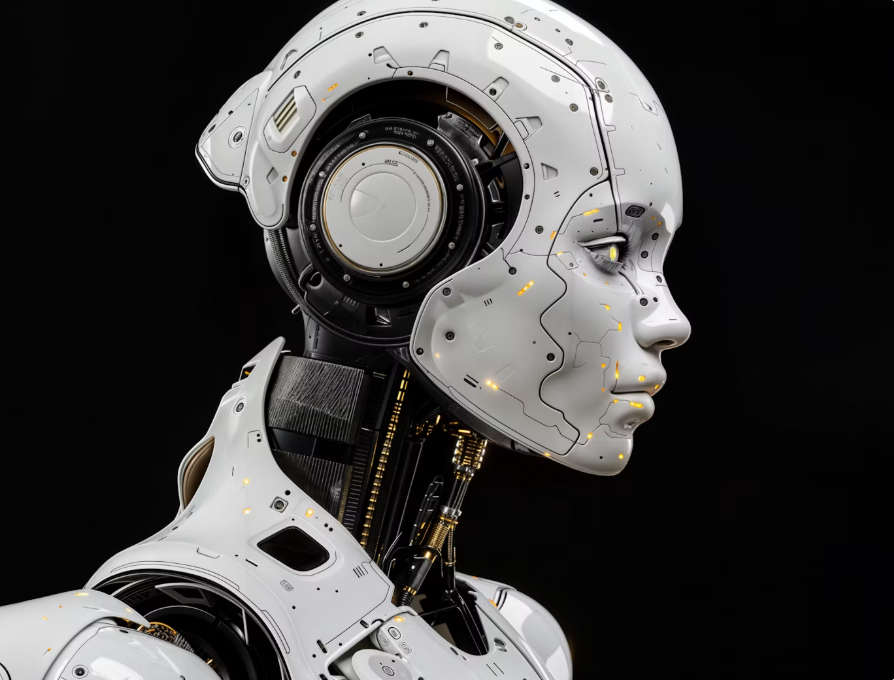
Away from the stock ticker, Musk's actual day-to-day creative obsession in 2026 has been humanoid robots. Tesla's Optimus program has moved from stage demos to real production lines at the Fremont factory, and the company is now spending more than $20 billion this year — up sharply from the roughly $8.5 billion it spent in 2025 — largely to scale up Optimus, the Cybercab, and the Tesla Semi.
What's newer is the software side of that push. Musk announced a joint initiative between Tesla and xAI, informally nicknamed "Macrohard," built around something called Digital Optimus — an AI system meant to handle real-time digital tasks the same way the physical Optimus robot handles real-world ones. Grok, xAI's chatbot, sits at the center of it, described by Musk as the system's "director," guiding how it interprets and reacts to information as it comes in.
Tesla is also rolling its own silicon into the mix. The company confirmed its AI5 inference chip has completed its design stage, calling it the most efficient edge-compute chip it has built, and is already deep into engineering work on a follow-up AI6 chip alongside a new supercomputer chip called Dojo 3 — all specifically aimed at giving Optimus and Tesla's self-driving software more onboard reasoning power without leaning entirely on the cloud.
Grok 5 and Musk's Very Public AGI Gamble
xAI's next model, Grok 5, is expected to launch in the first quarter of 2026 with roughly 6 trillion parameters, and in one interview Musk himself put the odds of it reaching genuine artificial general intelligence at somewhere around 10 percent. That's a strikingly candid number from someone running the company — most AI lab heads either dodge the question entirely or make much bolder promises. It's worth sitting with the fact that Musk is essentially saying there's a 90 percent chance his own flagship model won't get there, and he's building the roadmap around that honesty rather than around the hype.
Musk's bet, in plain terms, is that Tesla and xAI together — not xAI alone — end up leading the race toward AGI, because owning the robots, the cars, and the chips gives the AI something real to act through rather than just something to talk with.
“Musk's bet, in plain terms, is that Tesla and xAI together — not xAI alone — end up leading the race toward AGI, because owning the robots, the cars, and the chips gives the AI something real to act through rather than just something to talk with.”
The Mars Dream Meets a More Patient Reality
Musk has talked about colonizing Mars since long before Tesla was a household name, and for years the working plan involved uncrewed Starship missions to Mars as early as the current 2026 launch window. That timeline has quietly slipped. Reporting from February 2026 indicates SpaceX has redirected its near-term focus toward building a sustained presence on the Moon first — a shift the company frames as a five-to-seven-year detour rather than an abandoned dream.
The realistic horizon for humans actually landing on Mars has moved from "late 2020s" to somewhere in the mid-to-late 2030s. Musk hasn't given up on sending Optimus robots ahead of any human crew — he's floated the idea of an early explorer mission carrying the robots rather than people — but even that plan now looks more like a 2027-or-later prospect than the "end of this year" timeline he was describing back in 2025.
Robotaxis Are Quietly the Most Advanced Part of the Plan
While Mars headlines get the attention, the closest thing to a finished product among Musk's current bets is probably the robotaxi network. Tesla's unsupervised robotaxi service is now running in both Dallas and Houston, and the company says it hasn't recorded a single accident or injury in the unsupervised program to date. Regulatory approval has also landed in the Netherlands for supervised full self-driving, with broader approval expected in China by the third quarter of 2026.
The plan going forward is for the Cybercab — a purpose-built robotaxi with no steering wheel — to gradually take over as Tesla's highest-volume vehicle, ahead of even the Model Y. It's a quieter kind of progress than a Mars launch, but arguably the one closest to actually changing how ordinary people get around a city.
A Few Honest Questions People Are Actually Asking
Is Elon Musk still the richest person in the world?
Yes, by a wide margin, even after the summer's losses. His nearest competitor is still worth several hundred billion dollars less, according to every major tracker.
Could he become a trillionaire again?
Almost certainly, if SpaceX's private valuation climbs again or its public shares recover. Given how much of his fortune sits in one company's stock, the number could realistically swing by tens of billions in a single trading day.
Is any of this — Mars, Optimus, AGI — actually going to happen on the timeline Musk describes?
Musk's public timelines have a well-documented habit of slipping, sometimes by years. The direction tends to be real even when the date isn't — Starship did eventually fly, Optimus is real hardware now, robotaxis are genuinely on public roads. Just expect the calendar to move.
So What Does Musk's "Creativity" Actually Look Like in 2026?
Strip away the stock ticker and the headline-grabbing net worth swings, and what's left is a genuinely unusual approach to building things: refusing to treat Tesla, SpaceX, xAI, and Neuralink as separate companies at all. Grok is meant to power Optimus. SpaceX's rockets are meant to eventually carry Optimus. Tesla's chips are meant to run xAI's models more cheaply than anyone else's hardware can. Whether or not you find Musk's public persona appealing, it's hard to deny that this interlocking approach — betting that owning the whole stack beats owning one brilliant piece of it — is a genuinely distinctive way to run a business empire.
The financial rollercoaster of 2026 is, in a strange way, the price of admission for that approach. When your net worth is almost entirely paper wealth tied to a handful of ambitious, unproven bets, it's going to swing wildly in both directions. Musk seems to have made peace with that trade-off years ago. Whether the rest of us should be impressed, worried, or both by a single person's fortune moving by hundreds of billions of dollars in a month is a fair question — and one without an easy answer.
A note on the numbers Net worth estimates for Musk vary meaningfully between Forbes, Bloomberg, and other trackers because so much of his wealth sits in SpaceX, a private company with no daily share price. Treat every figure in this piece as a snapshot from mid-August 2026 rather than a fixed number — by the time you're reading this, it may already have moved.
The Bottom Line
Elon Musk's 2026 has been a study in contrasts: the first trillionaire in history, and then, weeks later, definitively not one. Underneath that financial whiplash sits a genuinely coherent creative bet — that robots, rockets, chips, and AI models work better as one interconnected machine than as separate companies chasing separate goals. The net worth headlines will keep swinging with SpaceX's stock price. The more durable story is whether Optimus actually ends up on factory floors and eventually on Mars, whether Grok 5 gets anywhere close to that 10 percent AGI chance Musk himself quoted, and whether robotaxis quietly become the most normal part of this entire wild bet. On present form, betting against Musk finishing what he starts has a mixed track record — and betting on his timelines has an even worse one.






