 William BensonVIEW PROFILE →
Inside Australia's Plan to Stockpile the Minerals China Doesn't Want It To Control
A new billion-dollar reserve, fresh legislation, and a diplomatic push across Washington are the opening moves in a quiet resource war few people are watching closely.
A new billion-dollar reserve, fresh legislation, and a diplomatic push across Washington are the opening moves in a quiet resource war few people are watching closely.
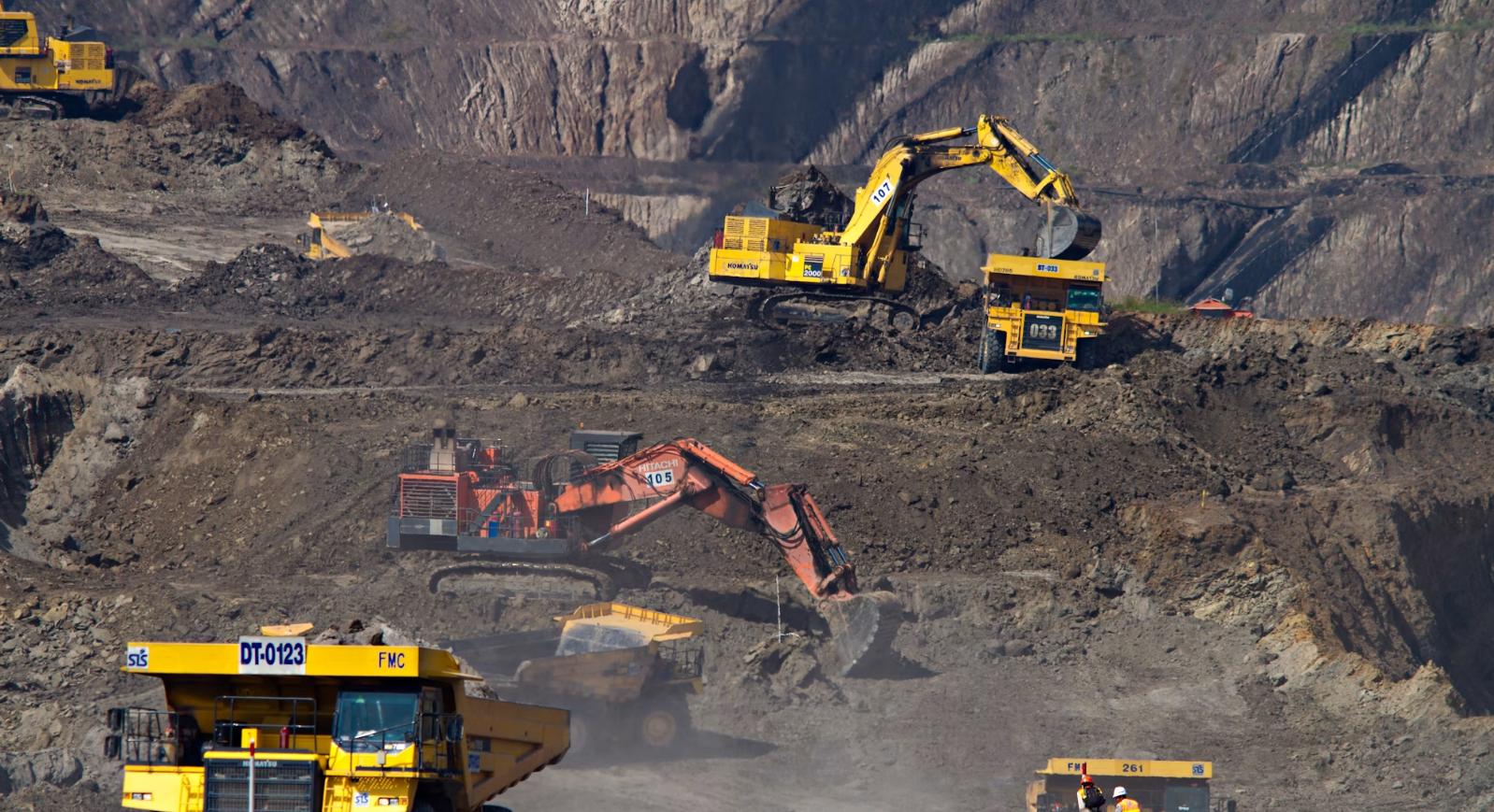
Somewhere beneath the red dirt of Australia's outback sits the raw material for almost everything that defines modern life: the magnets inside a wind turbine, the chips inside a missile guidance system, the phosphors inside a night-vision scope. For decades, Australia dug these materials out of the ground and shipped most of them off to be processed somewhere else. That somewhere else was, overwhelmingly, China. Now Canberra is trying something it has never really attempted before: keeping a strategic grip on its own resources rather than simply exporting the problem. The mechanism for doing that is a newly created Critical Minerals Strategic Reserve, and the story behind it says as much about the shifting balance of global power as it does about mining policy. A Reserve Built for a Very Specific Kind of Leverage At the centre of the plan sits a critical minerals strategic reserve worth 1.2 billion Australian dollars, unveiled by Prime Minister Anthony Albanese in January 2026. It marks a genuine departure from how Australia has historically managed its resource wealth, moving from a largely hands-off, market-driven approach toward something far more deliberate and centrally coordinated. The reserve's initial focus falls on three categories of material considered especially critical: antimony, gallium, and the broad family of seventeen elements known collectively as rare earths. Each one plays an outsized role in modern manufacturing relative to how little of it the world actually produces, showing up in everything from smartphone electronics and solar panels to some of the most sensitive defence systems in existence.
"Critical minerals and rare earths are at the heart of our economic and national security and are crucial for clean energy technology, advanced manufacturing and defence applications." — Madeleine King, Australian Minister for Resources and Northern Australia
Mining Isn't the Hard Part, Processing Is
It would be easy to assume Australia's challenge is simply about digging more minerals out of the ground faster. That's not really where the difficulty lies. China's dominance runs far deeper than raw extraction, it's built on decades of accumulated processing knowledge, specialized technical skill, and industrial infrastructure that took a very long time to develop.
That processing gap represents a genuinely steep competitive barrier for any Western country trying to build an alternative supply chain from scratch. You can mine a rare earth deposit in a matter of years, but replicating the refining expertise China has spent decades perfecting is a fundamentally harder and slower problem, one that money alone doesn't instantly solve.
Why rare earths aren't actually rare
Despite the name, rare earth elements aren't especially scarce in the Earth's crust. What's genuinely scarce is the capacity to separate and refine them into usable form, a process that's chemically difficult, environmentally messy, and dominated almost entirely by Chinese processing facilities built up over decades.
New Laws That Turn Australia Into a Commodity Trader
To actually put the strategy into motion rather than leave it as an announcement, Australia's parliament passed sweeping legislation in April 2026 that fundamentally reshaped how the nation manages its strategic resources. The new laws handed Export Finance Australia the authority to operate as a government commodity trading entity, a striking departure from its traditional role as an export credit agency and a direct signal of how seriously Canberra is treating this.
A central piece of the mechanism involves what are known as offtake agreements. Through its export finance and credit arm, the government can now facilitate deals where buyers commit to purchasing minerals, sometimes before a single shovel of dirt has even been turned. That kind of upfront certainty is designed to de-risk new mining projects for investors and encourage exactly the sort of domestic development that's been historically difficult to finance.

Taking the Message to Washington
The strategy isn't purely a domestic economic play, it carries a heavy diplomatic dimension too. Treasurer Jim Chalmers travelled to Washington specifically to promote the reserve among allies within the G7 and beyond. Australia itself isn't a G7 member, that group consists of the United States, Britain, Canada, France, Germany, Italy and Japan, but the country has positioned itself firmly alongside the bloc's broader strategic priorities on resource security.
Interest hasn't been confined to traditional Western allies either. Countries including India, Mexico and South Korea have attended related discussions, a sign that concern over secure, diversified access to critical minerals has stopped being a niche commercial issue and become something much closer to a shared matter of national and economic security across a genuinely broad coalition of governments.