 William BensonVIEW PROFILE →
Inside Karamoja's Hunger Crisis: What Happens When the Rains Simply Don't Come
Failed rains have wiped out an entire planting season, left hundreds of thousands facing acute hunger, and already claimed at least 16 lives. Here is what's actually happening, and why this region keeps ending up here.
Failed rains have wiped out an entire planting season, left hundreds of thousands facing acute hunger, and already claimed at least 16 lives. Here is what's actually happening, and why this region keeps ending up here.
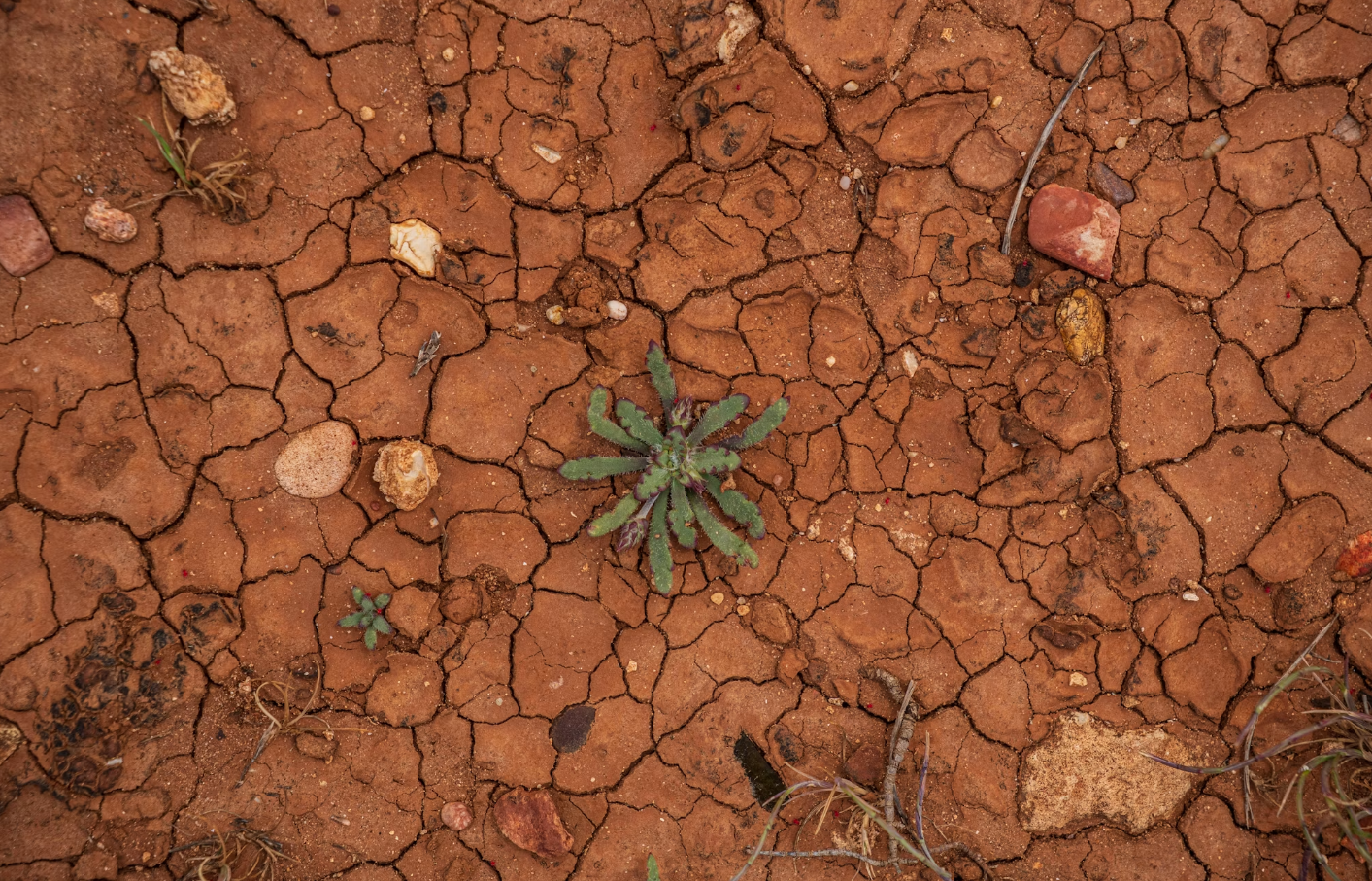
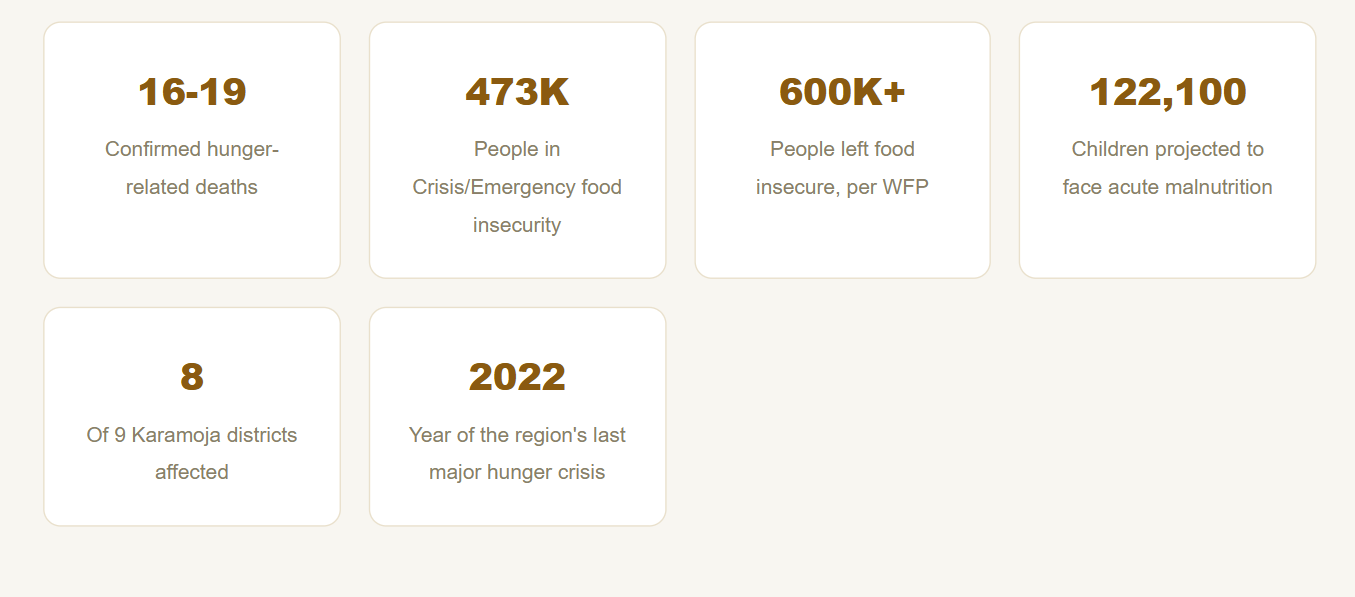
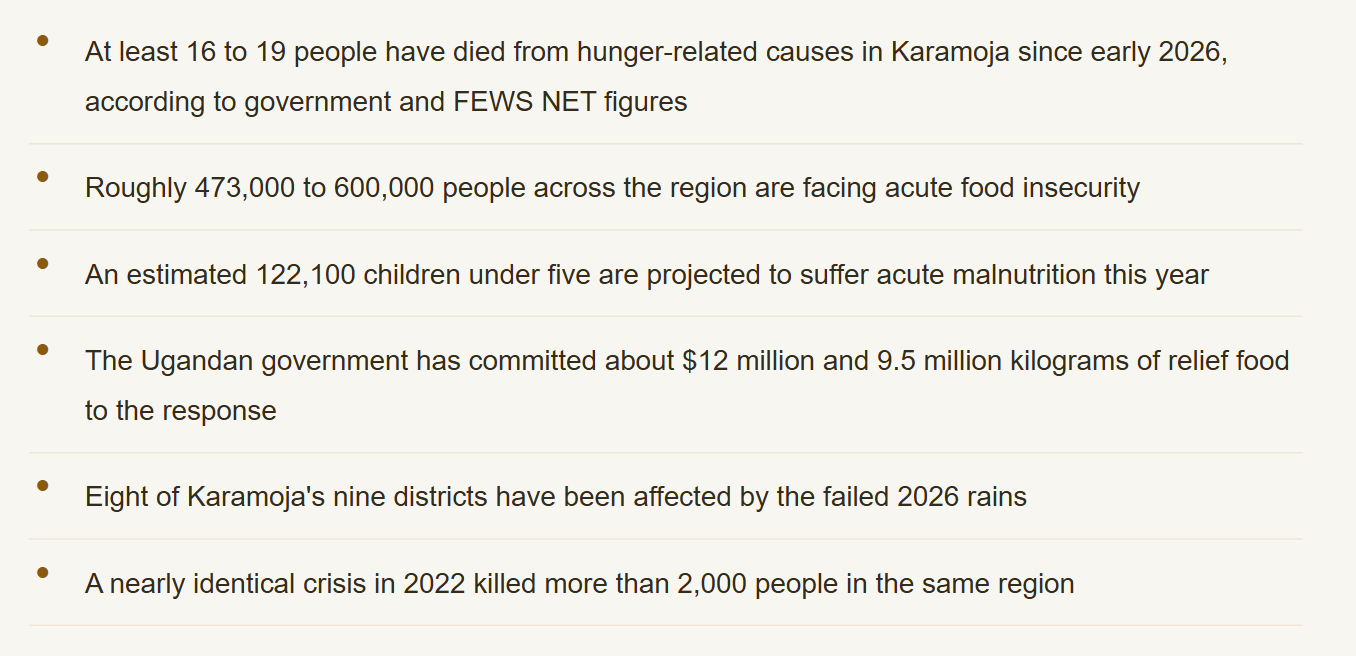
In Kotido District, a small raised granary once held enough sorghum to see a family of seven through the year. By early June it was empty, not from theft or waste, but because the rain that was supposed to fill it never really arrived. Multiply that single granary by tens of thousands of households scattered across Uganda's north-eastern Karamoja sub-region, and you start to understand the scale of what has become one of East Africa's most serious, and most avoidable, humanitarian emergencies of 2026. What's Actually Happening on the Ground In early July 2026, Uganda's government confirmed what aid workers in Karamoja had been warning about for weeks: at least 16 people had died from causes directly linked to hunger and food shortages across the region. The Office of the Prime Minister's Permanent Secretary, Alex Kakooza, formally acknowledged the deaths in a July 9 statement, extending condolences to affected families as the government simultaneously launched emergency food distribution. Later reporting from the Famine Early Warning Systems Network placed the confirmed toll at 19 starvation-related deaths, with roughly 1.5 million people across the region now at risk of malnutrition. The numbers behind those deaths are stark. According to Integrated Food Security Phase Classification analysis covering April through July 2026, roughly 473,000 people, about 32% of Karamoja's entire population, are currently experiencing Crisis or Emergency levels of acute food insecurity. A separate World Food Programme assessment put the number of people left food insecure by the failed rains at more than 600,000. Whichever figure ends up being most precise, the underlying picture is the same: a region of just over a million people, watching a slow-motion emergency unfold in real time. Karamoja's granaries tell the story better than any statistic can. Households that planted sorghum in February, when the first rains arrived on schedule, watched those same rains stop almost immediately and never properly return. By the time the dry season peaked in June, what should have been a harvest was instead a field of thin, yellowed stalks standing in cracked, hardened ground. Why the Rains Failed, and Why Karamoja Specifically Karamoja is Uganda's driest region by a wide margin, an area of semi-arid plains, rocky, poor-quality soil, and a population that has relied for generations on a combination of subsistence sorghum farming and cattle herding. The 2026 crisis traces back to a specific meteorological failure: initial rains in March supported normal planting activity across much of the region, but rainfall then declined sharply and did not recover through the remainder of the growing season, a pattern consistent with the kind of El Niño-linked disruption that has hit East Africa's rain-fed agricultural systems repeatedly over the past decade. For a farming system with no irrigation infrastructure to fall back on, a single failed rainy season doesn't just mean a smaller harvest, it means no harvest at all. Livestock, the other pillar of the Karamojong pastoralist economy, fared little better: without adequate pasture or water, herds have weakened significantly, undermining a resource families would otherwise sell or rely on directly for milk and meat during exactly this kind of shortfall. When both halves of a subsistence economy fail in the same season, there is very little buffer left.
The Human Cost Goes Well Beyond the Death Toll
Fatality figures, however serious, capture only part of what a crisis like this does to a population. Health officials and humanitarian organizations working in the region project that roughly 122,100 children under the age of five will experience acute malnutrition during 2026, including more than 30,000 cases severe enough to be classified as life-threatening without treatment. An additional 8,000 pregnant and breastfeeding women have been identified as urgently needing nutritional support, a group especially vulnerable to the compounding health effects of prolonged food shortage.
Aid workers describe families in the hardest-hit districts, including Kotido, Kaabong, and Moroto, surviving on a single meal a day well before the dry season reached its peak. For young children, that kind of prolonged nutritional gap during a critical developmental window can carry consequences that extend years beyond the immediate crisis, even once emergency food aid arrives and the visible emergency subsides.
This is not Karamoja's first crisis, and that's the real story
Uganda's 2022 hunger crisis in the same region is estimated to have killed more than 2,000 people, and the pattern preceding it looks almost identical to 2026: failed rains, crop losses, livestock deaths, then an emergency response arriving after the damage was already severe. Regional commentators have pointed out that the recurring question shouldn't be why drought affects Karamoja, drought is a normal feature of dryland climates worldwide, but why drought in this specific region keeps translating into mass hunger and death despite decades of development funding directed at exactly this problem.
How the Government and Aid Agencies Are Responding
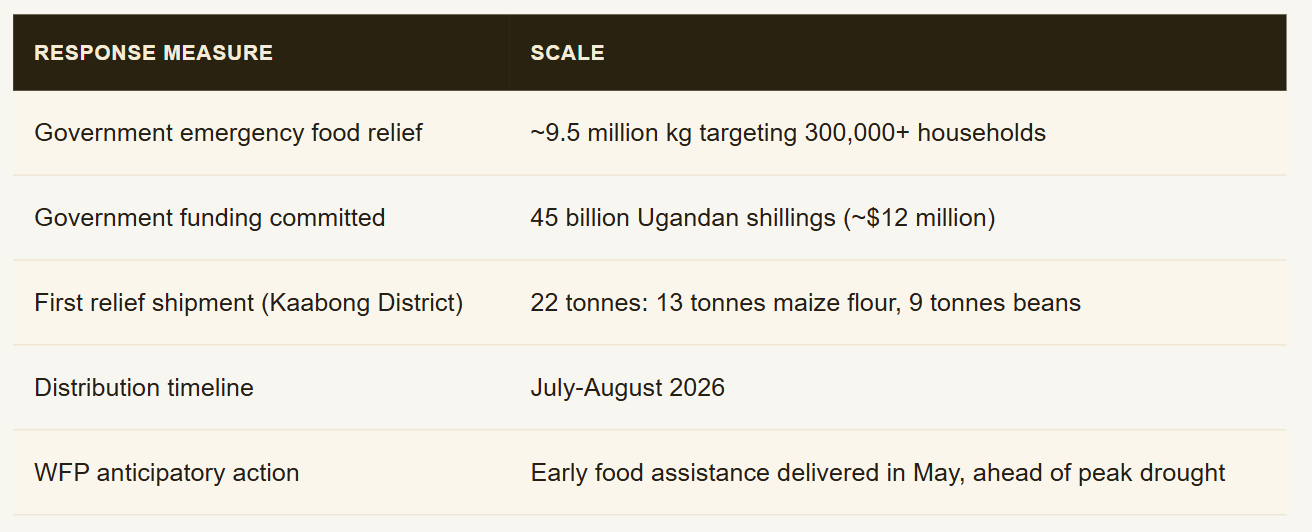
Uganda's Office of the Prime Minister launched its emergency response on July 9, 2026, with the first consignment, 22 tonnes of relief food including maize flour and beans, delivered to Loduku and Loyoru sub-counties in Kaabong District the day before. The broader relief operation, according to the Food Rights Alliance, aims to distribute nearly 9.5 million kilograms of food, primarily maize flour and dry beans, to more than 300,000 households spread across 480 parishes in Karamoja's nine districts. The government has committed roughly 45 billion Ugandan shillings, about $12 million, to fund the effort, with the distribution exercise running through July and August 2026.
The World Food Programme, working alongside Ugandan authorities, had actually begun a more limited anticipatory response earlier in the year, delivering early support in May to households in the highest-risk areas before the drought reached its peak. WFP officials have pointed to that early intervention as evidence that acting before a crisis fully materializes measurably softens its impact, even though the scale of this year's rainfall failure ultimately outpaced what anticipatory assistance alone could cover. Alongside the immediate food distribution, the government has also pledged to supply drought-resistant, disease-resistant, and early-maturing seed varieties ahead of the next planting season, an effort aimed specifically at preventing a repeat of this year's total crop failure.
What would actually break the cycle
Development specialists who have worked in Karamoja for years have started asking a more uncomfortable question than "when will the next drought hit": why does a region that has received substantial public investment over decades still slide into a hunger emergency virtually every time the rains underperform. Climate and natural-resource researchers point to a familiar cycle, relief arrives once a crisis is already visible, conditions stabilize once rains return, and longer-term resilience investment quietly stalls until the next dry spell restarts the same sequence. Genuinely climate-resilient development in the region, researchers argue, would mean investing in water storage infrastructure, drought-tolerant seed systems, and diversified livelihoods during the calm years between crises, not just emergency food convoys once the crisis is already underway.