 William BensonVIEW PROFILE →
Not a Car Company Anymore: Inside Elon Musk's Bet That Robots, Not Sedans, Are Tesla's Real Future
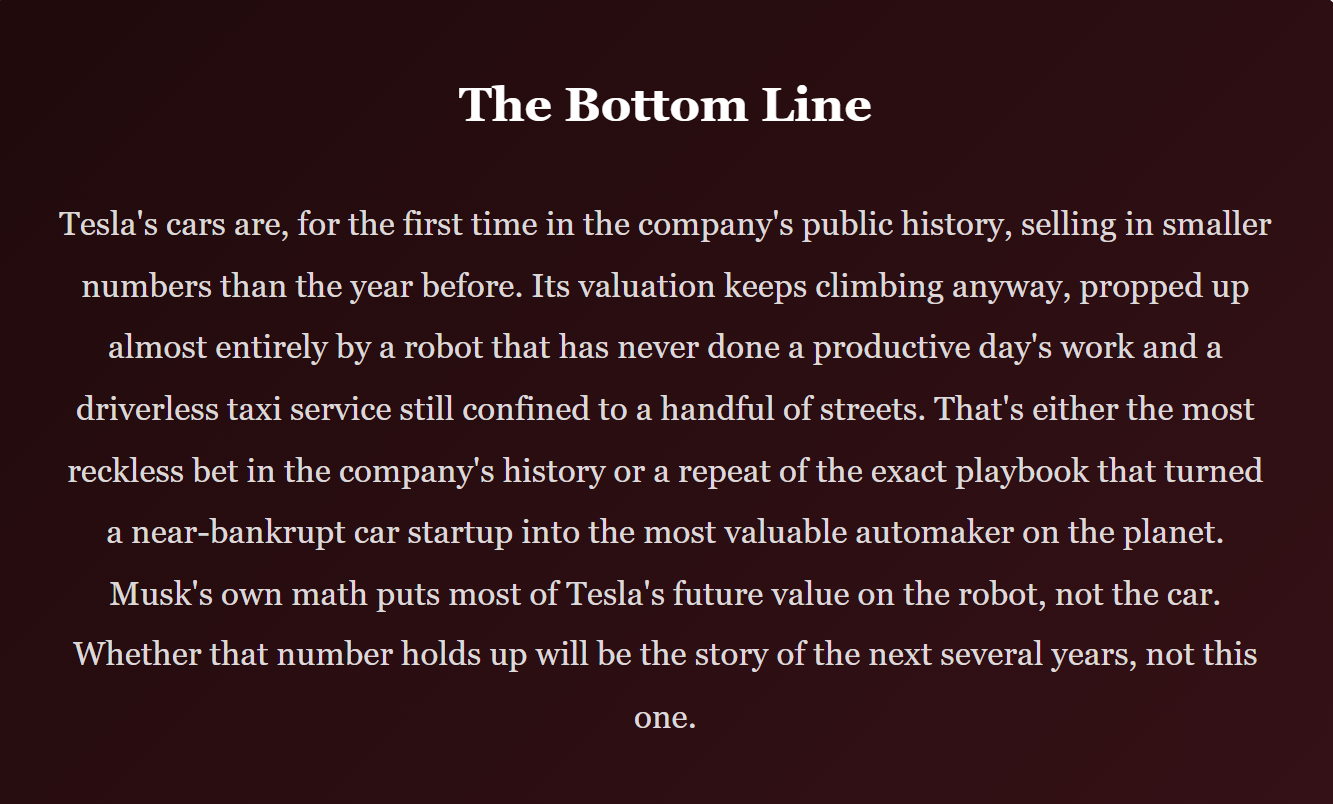
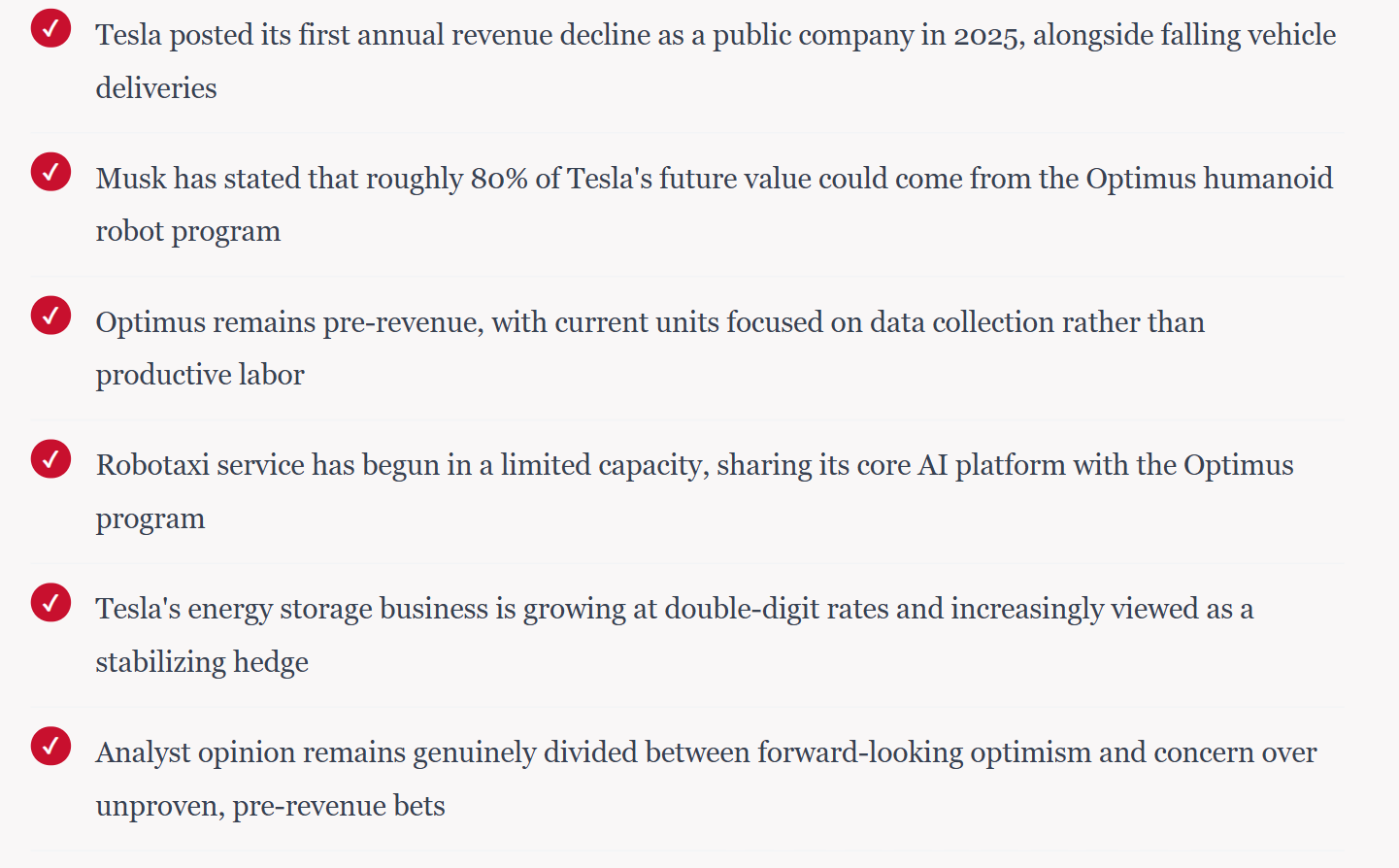
Most car companies would treat a first-ever annual revenue decline as a crisis to manage quietly. Tesla treated it as background noise, because by the time the number landed, the company had already told investors the cars were no longer the point.
Most car companies would treat a first-ever annual revenue decline as a crisis to manage quietly. Tesla treated it as background noise, because by the time the number landed, the company had already told investors the cars were no longer the point.
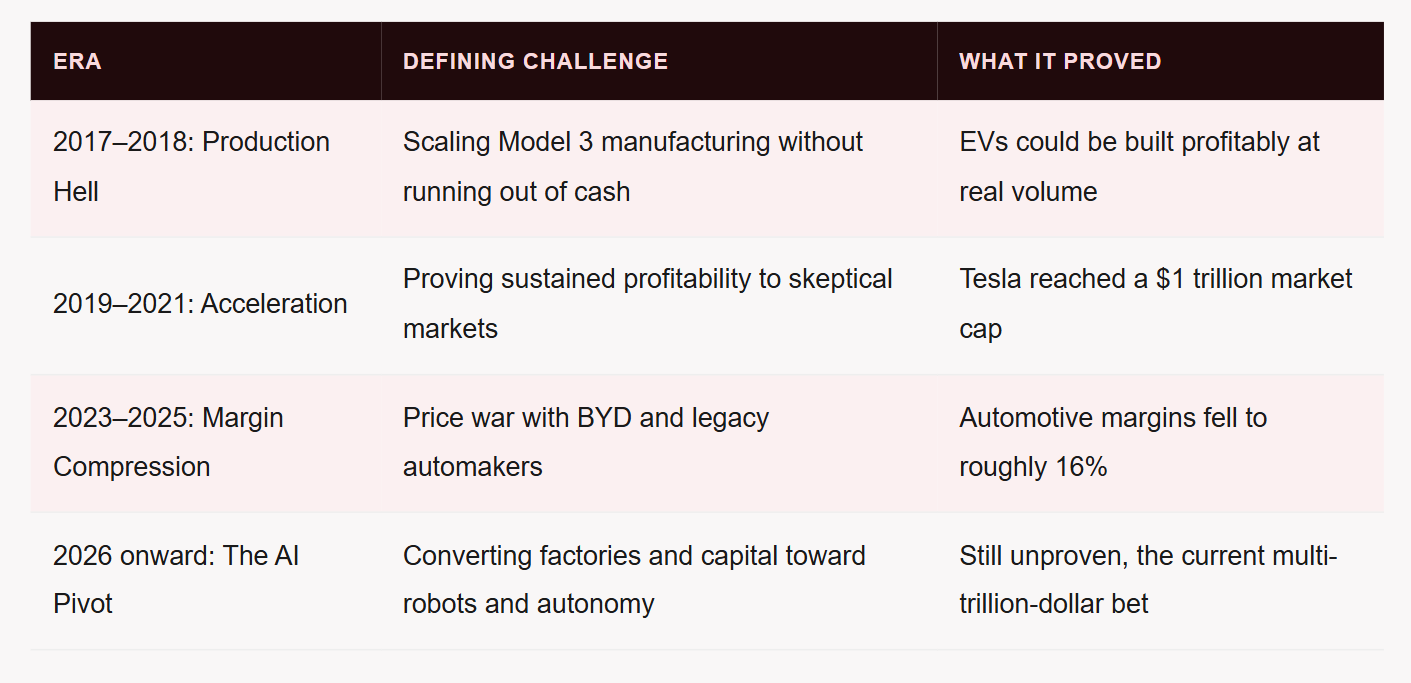
There's a specific kind of exhaustion that shows up in early accounts of Tesla's 2017 and 2018, the stretch the company itself came to call "production hell." Engineers were reportedly sleeping on the factory floor, assembly lines built for a fraction of the required volume, and a mass-market sedan that suppliers, analysts, and more than a few employees quietly doubted would ever ship in the numbers Tesla had promised. The company came close enough to running out of cash that its own founder later described those months as some of the most miserable of his life. None of that history reads like the origin story of a business that would, within a few years, become the most valuable automaker on the planet. That near-collapse and the recovery that followed established a pattern that's defined nearly every major Tesla decision since: bet enormous, uncomfortable amounts of money and credibility on a target most competitors think is unrealistic, absorb a brutal, often public struggle to get there, and let the eventual payoff reset what the entire industry assumed was possible. The Model 3 production crisis eventually proved electric vehicles could be built profitably at real scale, a result that helped push the company to a trillion-dollar valuation by 2021. What's happening now, as Tesla leans hard into humanoid robots and driverless taxis while its core car business actually shrinks, looks like the same playbook running a second time, just with a considerably higher price tag. The uncomfortable numbers behind the pivot 2025 was, by Tesla's own historical standards, a genuinely difficult year. Annual revenue fell for the first time since the company went public, vehicle deliveries dropped by more than eight percent, and a Chinese rival overtook Tesla as the world's largest seller of pure electric vehicles. Margin pressure from a global price war, softening EV demand in several major markets, and mounting public attention on the company's chief executive's political activities all compounded through the year. None of that is a small setback for a company whose identity, for most of the last decade, was built entirely around being the electric car company.
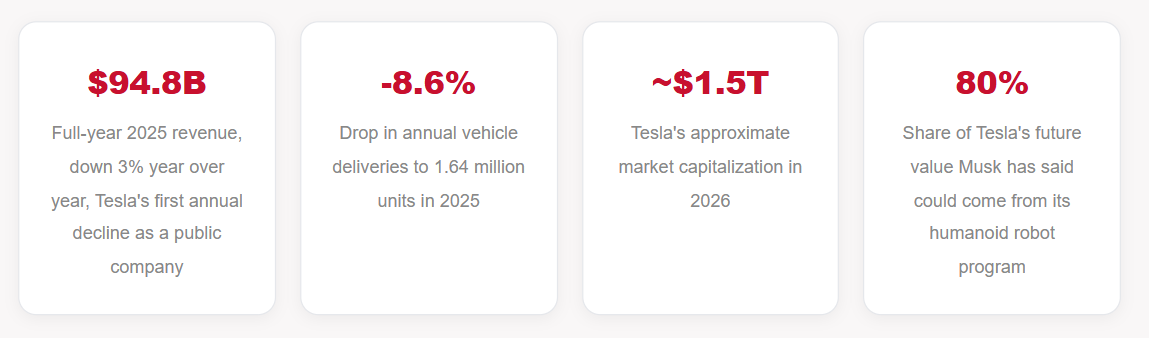
That last figure is the one that actually explains everything else happening at the company right now. Rather than treating a shrinking core business as an emergency to be fixed through better cars alone, Tesla's leadership has been unusually direct about where it believes the company's real long-term value now sits, and it isn't in the sedans and SUVs that built the brand.
The robot that hasn't sold anything yet
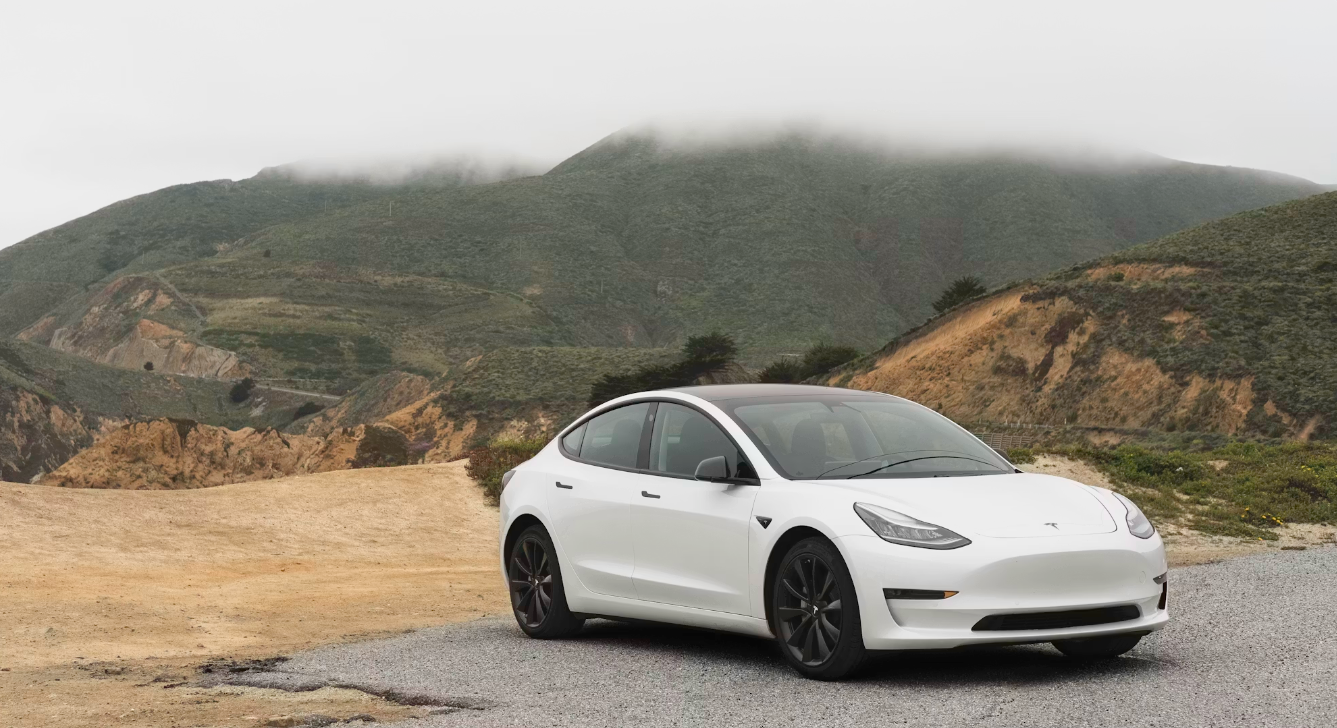
Optimus, Tesla's humanoid robot program, remains genuinely pre-revenue as of 2026. Roughly a few hundred units have been deployed so far, and Musk himself has described them as still primarily useful for learning and data collection rather than replacing human labor on a factory floor. And yet the company has already begun converting parts of its original Fremont factory, the same plant that nearly broke it during production hell, toward building these robots instead of the Model S and X sedans that once represented Tesla's entire product line.
Why Musk is willing to bet this much on an unproven product
The logic behind that bet rests on scale that dwarfs the automotive market Tesla currently competes in. A general-purpose humanoid robot capable of performing factory and eventually household labor represents, by some estimates, a market opportunity worth trillions of dollars over the coming decades, a figure large enough that even a modest share of it would outstrip anything the car business alone could ever generate. Musk made the underlying priority explicit in a public statement in September 2025.
About 80% of Tesla's future value will come from Optimus.
— Elon Musk, September 2025
The other half of the bet: cars that drive themselves
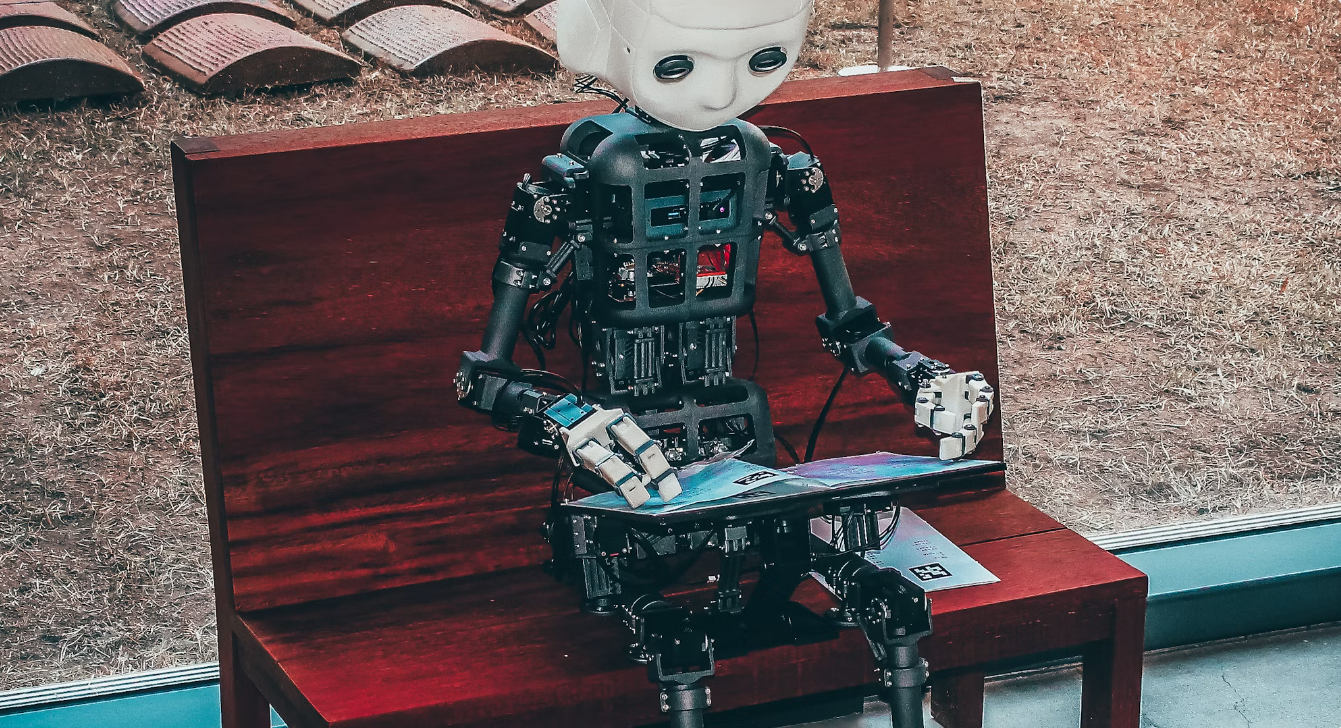
Running in parallel to Optimus is Tesla's push toward fully unsupervised Full Self-Driving and a dedicated robotaxi vehicle called the Cybercab, a two-seat electric vehicle built without a steering wheel or pedals. Both programs share the same underlying AI computing platform, which is part of why Tesla frames them as a single combined bet rather than two separate side projects. Driverless robotaxi service has already begun in a limited capacity in Austin, Texas, with cumulative Full Self-Driving miles pushing well past eight billion as the software inches toward the fully unsupervised threshold Musk has set as the next major milestone.
Tesla's energy storage business, built around its Megapack grid-scale batteries, has quietly become one of the more dependable parts of this story while the more speculative bets play out. Revenue in that segment grew by roughly a quarter in 2025 with margins holding near 30%, and expansion of manufacturing capacity, including a new Houston facility, points to a business analysts increasingly view as a stable, counter-cyclical hedge against the volatility of car sales and the still-unproven robotics timeline.
Why Wall Street is split on this bet
Skeptics point out that a valuation this size is, in the words of one prominent analyst, almost entirely forward-looking, resting on products that haven't generated meaningful revenue yet. Optimists counter that Tesla's combination of proprietary AI chips, a massive real-world driving data set, and a CEO willing to bet the company's core identity on an unproven thesis is exactly the kind of setup that preceded its EV breakthrough a decade earlier. Both views can be true at once, which is largely why analyst ratings on the stock remain genuinely divided heading into 2026.
What could actually derail this
The clearest risk sitting underneath this entire strategy isn't technological, it's personal. Tesla's valuation is unusually tied to a single individual in a way few large public companies tolerate, and any further dilution of the CEO's attention across his other ventures, along with the public and political controversy that's followed him, has already been cited by analysts as a factor in softened demand in parts of Europe. Add in the genuine execution risk of shipping a commercially viable humanoid robot on anything close to the current timeline, and the bet Tesla is making looks less like a sure thing than a high-conviction wager the market has, so far, mostly chosen to believe.
None of this guarantees the pivot succeeds on anything close to the timeline currently being promised, plenty of ambitious Tesla deadlines have slipped before. But the company's entire history argues against betting against Musk's willingness to keep pushing an uncomfortable, expensive vision long past the point where a more conventional company would have quietly scaled it back. Production hell nearly ended Tesla once. What's happening now looks, by design, like the same kind of bet, just aimed at an entirely different kind of factory floor.