 William BensonVIEW PROFILE →
Pixel 11 Just Dropped: Inside Google's Boldest Bet Yet on AI-First Phones
Google didn't just launch a new phone this week. It launched an argument , that the thing worth paying for in 2026 isn't a sharper screen or one more camera lens, but whatever's quietly thinking in the background. Here's whether that argument actually holds up.
Google didn't just launch a new phone this week. It launched an argument — that the thing worth paying for in 2026 isn't a sharper screen or one more camera lens, but whatever's quietly thinking in the background. Here's whether that argument actually holds up.
There's a very specific kind of confidence in going first. Apple hasn't even sent out its September invites yet, and Google already stood on a stage in New York and said, essentially, "here's our whole hand." That happened on Wednesday, and if you've been half-following the leaks for the past few months, not a lot of it should feel like a total surprise. What's more interesting than the specs themselves is the timing, the tone, and the sheer number of things Google is trying to cram under one umbrella called "Pixel 11."
I've sat through a handful of these Made by Google events over the years, and this one felt different in a way that's hard to pin down exactly — less like a hardware reveal, more like a company trying to convince you that the phone itself is almost beside the point. Let's get into why.
Why Google moved first — and why that matters more than you'd think
Google picked New York again for the keynote, same as last year, and pushed the show to a later 3 p.m. Pacific start. Small detail, but the bigger one is the calendar: this event landed roughly a week earlier than 2025's, which puts real distance between Google's announcement and whatever Apple has planned for September. Pre-orders reportedly open the same day as the keynote, so the gap between "you saw it" and "you can buy it" is basically zero.
Going early isn't just about bragging rights. It means every review, every "should I upgrade" YouTube video, and every Reddit thread arguing about battery life gets a running start before Apple even opens its mouth. For a company that's spent years being the "everyone else" in the smartphone conversation, that's not a small thing.
Four phones under one name
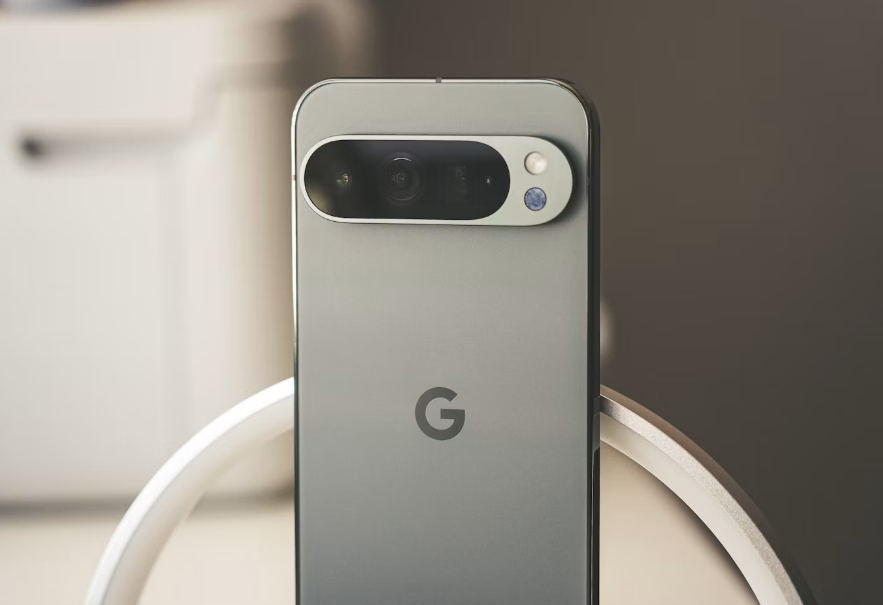
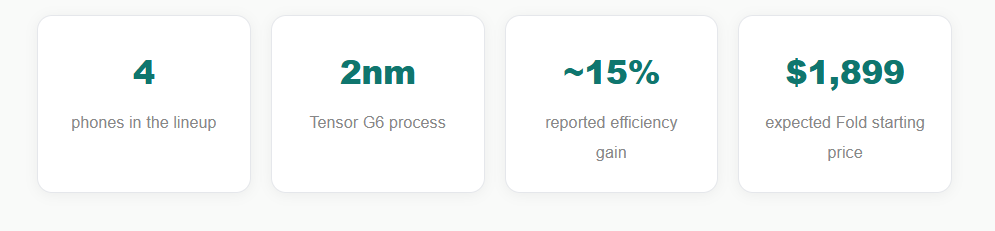
"Pixel 11" isn't really one product — it's a family of four. There's the standard Pixel 11, a Pro version, a bigger Pro XL, and the second-generation Pixel 11 Pro Fold. Google also used the stage to show off the Pixel Watch 5, and word on the street is there's a small Bluetooth tracker in the mix too, aimed squarely at the kind of item-finder gadget Apple and Tile have had to themselves for years. Every phone in the lineup reportedly ships running Android 17 with Gemini baked in from the very first setup screen — not something you download later, not a feature buried three menus deep. That's a deliberate choice, and it's the thread that ties this whole launch together. Quick specs snapshot
The Tensor G6: the part nobody outside tech circles will ever mention, and the part that matters most
Here's the thing about chip announcements — most people's eyes glaze over the second someone says "nanometer process." Fair enough. But stick with me for a second, because this is genuinely the whole story of the Pixel 11, even if it's the least flashy part of it. The Tensor G6 is reportedly Google's first chip built on a 2-nanometer process, a jump down from the 3nm G5 that powered last year's Pixel 10. Smaller process, in theory, means better power efficiency — leaks are pointing to somewhere around 15% — and more headroom to run demanding software without draining the battery by lunchtime. None of that is really the point, though. The point is what that headroom gets spent on. Google doesn't design its own silicon so it can win a spec sheet contest against Qualcomm. It designs its own silicon so its AI models can run directly on the phone, without pinging a server every time you ask it something. The G6 is said to support Gemini Nano 3, and Google's own developer documentation apparently suggests the most advanced on-device features need a flagship-tier chip and at least 12GB of RAM — a bar every phone in this lineup should clear without breaking a sweat.Why on-device AI actually mattersWhen an AI model runs on your phone instead of a data center somewhere, two things change: it's faster because there's no round trip to a server, and it's more private because your data isn't necessarily leaving the device at all. That's a real, practical difference — not just a marketing line.What the AI actually does when you're not thinking about itSpecs are the easy part to list. The harder question — the one that actually decides whether you'd want one of these phones — is what any of it does for a normal person on a normal Tuesday. Google's answer leans on a feature called Magic Cue, which first showed up on the Pixel 10. The idea is simple even if the engineering behind it isn't: the phone quietly looks at what's happening across Gmail, Calendar, and Messages, and surfaces the right piece of information at the right moment without you having to dig for it. Calling an airline about a delayed flight? Your confirmation number and flight details are supposedly just... there, without a search. Texting a friend about dinner? It can apparently pull up the reservation you made three weeks ago. Gemini Live, the assistant's hands-free conversational mode, is also getting deeper hooks into Calendar, Keep, Tasks, and Maps. The pitch for the Pixel 11 specifically is that the new chip lets more of this proactive assistance happen locally, on-device, rather than round-tripping through the cloud every time. Google isn't betting that people want a phone that answers faster. It's betting they want a phone that answers before they've finished asking. Whether that actually lands in daily use — versus just sounding good in a keynote — is the kind of thing you only really find out three weeks after buying it, when the novelty wears off and you notice whether you're actually using the feature or just remembering it exists.Pixel Glow: the one feature nobody asked for and everyone's talking about anywayNot everything at these events is about productivity, and honestly, that's a relief. One of the more talked-about additions — unofficially nicknamed Pixel Glow, teased earlier this year at Google's I/O developer conference — turns the phone's signature camera bar into a strip of colored light. It pulses for calls, notifications, and while charging. Early rumors said three colors. Later leaks bumped that up to as many as eight. It's a small, almost frivolous touch, and it's a smart one, because it turns the camera bar — originally just a design quirk to fit the lenses — into something people actually recognize a Pixel by, the way you'd recognize an iPhone's notch from across a room. Reports suggest it replaces the rear temperature sensor that showed up on recent models, which, if we're honest, most people never used anyway.
The Fold, all grown up
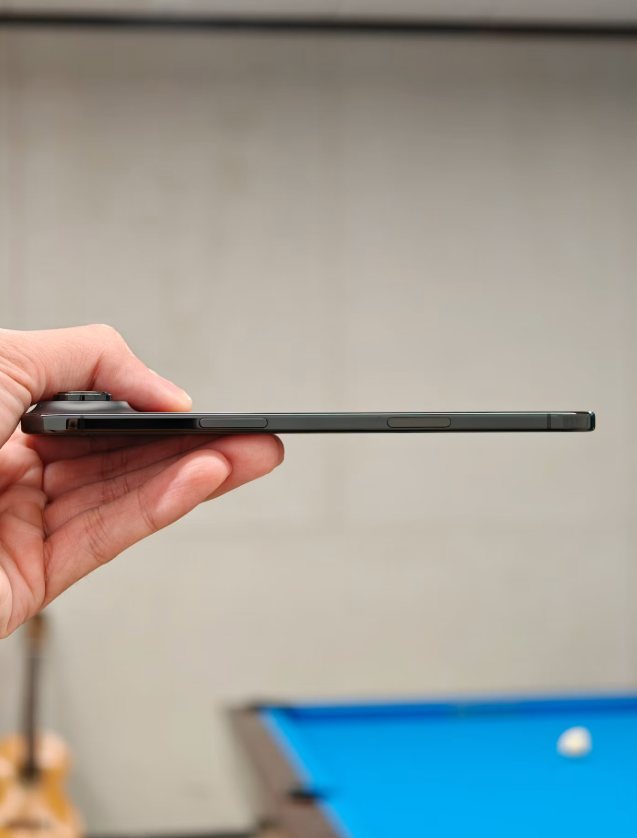
The priciest
phone of the day is the Pixel 11 Pro Fold, and it's clearly the one Google
wants taken seriously as a "real" flagship rather than a curiosity.
Leaks point to an 8-inch main display unfolding from a 6.4-inch cover screen,
both running at a smooth 120Hz, a roughly 4,806mAh battery, 30W wired charging,
and wireless charging on top. Expected starting price sits around $1,899.
The
timing here is almost funny if you think about it for a second. Google is
polishing its second-generation foldable at the exact moment Apple is rumored
to be building its very first one. For once, the roles are flipped — Google's
the veteran in the room, and Apple's the one walking in without having done
this before.
Pixel Watch
5 and the rest of the ecosystem
The Pixel Watch 5 rounds things out at an
expected $349, in 41mm and 45mm sizes with optional cellular. It's not the
headline of the day, but it doesn't need to be — its job is to make the case
that Google's whole hardware lineup talks to itself the way Apple's does, which
has always been one of Google's weaker arguments against the iPhone.What's expected across the lineup
·
Android
17 pre-installed with Gemini set up from the first boot
·
Tensor
G6 chip on a 2nm process across every model
·
Gemini
Nano 3 for on-device AI processing
·
Pixel
Glow lighting built into the camera bar
·
Magic
Cue pulling context from Gmail, Calendar, and Messages
·
Hands-free
Gemini Live across Calendar, Keep, Tasks, and Maps
·
Pixel
11 Pro Fold with an 8-inch main display at 120Hz
·
Pixel
Watch 5 in two sizes with optional cellular
Two
companies, two completely different bets
Step back from the individual features for a second and you can see the actual story here. Apple's whole pitch, for close to two decades now, has been a tightly sealed ecosystem — hardware, software, and services that all fit together so neatly you stop noticing the seams. Google's pitch has always been messier by comparison: open Android, hardware from a dozen manufacturers, an assistant that has to work across all of it.
What's changed is that Google is now leaning into that messiness as a strength rather than apologizing for it. The argument isn't "we're as polished as Apple." It's "we're more useful than Apple, because our AI actually knows what's in your inbox." Whether American buyers — who, let's be honest, still overwhelmingly reach for the iPhone by habit — actually care about that distinction is the multi-billion-dollar question Google is asking with this launch.
A little context: how Pixel got here
It's worth remembering that Google wasn't always this confident about hardware. The first Pixel, back in 2016, was a decent phone with an outstanding camera and not much else going for it — a proof of concept more than a serious rival to Samsung or Apple. For years after that, Pixels sold in numbers you could describe charitably as "modest." Great camera, mediocre everything else, and a company that always seemed a little embarrassed to be in the hardware business at all.
The turning point was the decision to stop buying chips off the shelf and start designing them in-house, starting with the original Tensor in the Pixel 6. That single choice is really what makes the Pixel 11 possible. Once Google controlled its own silicon, it could build software features — real-time call screening, on-device transcription, and now this new wave of proactive AI — that no other Android phone maker could easily copy, because nobody else had the same chip doing the same specialized work. Five generations of Tensor later, that bet looks like it's finally paying off.
A few honest questions people are actually asking
Will the Pixel 11 work fine without a Google account tied to everything?
Technically, yes — but most of what makes this launch interesting, the Magic Cue stuff especially, depends on the phone having access to your Gmail and Calendar. Use it with a bare-bones setup and you're basically buying a nice Android phone with a good camera, which isn't nothing, but it's not really the point Google's trying to make.
Is the Tensor G6 going to beat Qualcomm's latest Snapdragon in raw benchmarks?
Probably not, and that's fine. Tensor chips have never really tried to win pure performance benchmarks against Snapdragon or Apple's own silicon. They're optimized for a narrower job — running Google's AI models efficiently — and that's a different competition entirely.
Is now a smart time to buy, or should I wait for Apple's event?
If you're already leaning Android, there's not much reason to wait — nothing about Apple's September event is going to change what the Pixel 11 offers. If you're genuinely torn between ecosystems, waiting three or four weeks to see Apple's actual foldable and iPhone 18 Pro lineup costs you very little.
So, should you actually buy one?
Here's my honest take, for whatever it's worth. If you're the kind of person who already lives inside Gmail, Google Calendar, and Google Photos, the Pixel 11's proactive AI features are going to feel less like a gimmick and more like your phone finally catching up to how you already use it. That's a real, tangible upgrade, not just a keynote slide.
If you're deep in Apple's ecosystem — iMessage, AirDrop, an Apple Watch on your wrist — none of this is going to be compelling enough to pull you out. And that's fine. Google isn't really trying to convert die-hard iPhone users with this launch anyway. It's trying to give everyone else, and its own existing users, a very good reason to upgrade this year instead of waiting.
Before you pre-order
Everything above is still built on leaks, teasers, and reporting ahead of the actual keynote. Google has a habit of holding back a surprise or two, so treat pricing and specs as "very likely," not gospel, until the company confirms them on stage.
The Bottom Line
Google didn't just release a new phone this week — it made a bet, loudly and a full month before Apple could respond, that the future of the smartphone is decided by what's happening quietly in the background, not what's printed on the spec sheet. Whether that bet pays off depends less on the Tensor G6's benchmark scores and more on whether Magic Cue and Gemini Live actually save you time on a random Wednesday. We'll know a lot more once real units are in real hands — but for a company that's spent years playing catch-up, going first this time says a lot on its own.






