William BensonVIEW PROFILE →
Revolut, Monzo, and the Billion-Pound Race to Prove British Fintech Actually Grew Up
Two apps that started out promising a better bank account are now circling some of the biggest IPO valuations Europe has ever seen, and only one of them can list first.
Two apps that started out promising a better bank account are now circling some of the biggest IPO valuations Europe has ever seen, and only one of them can list first.
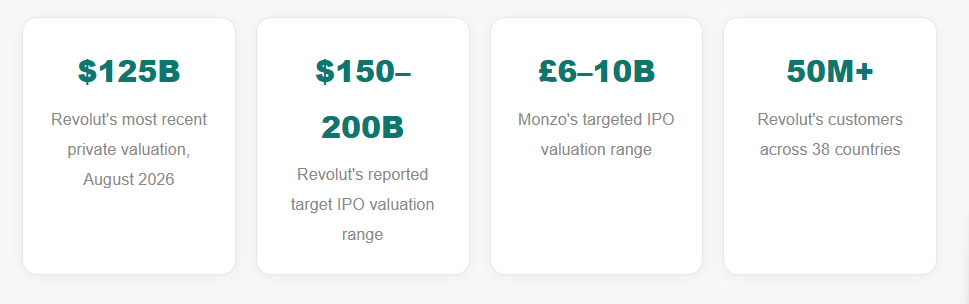
Ten years ago, Revolut and Monzo were scrappy startups trying to convince people that a bank could live entirely on a phone screen, no branch required. Today, one of them is reportedly eyeing a public listing that could value it at up to $200 billion, more than most of the FTSE 100. The other is racing to get to the stock market first, betting that being early matters more than being biggest. Between them sits one of the most closely watched IPO stories in Europe, and it says a lot about how far, and how fast, British fintech has actually come. Two Companies, Two Very Different Races Revolut and Monzo have spent a decade as the UK's two most recognizable challenger banks, but as they head toward public markets, they're running fundamentally different races. Revolut is playing for scale and valuation, reportedly targeting a market cap of $150 to $200 billion, a figure that would place it among the most valuable financial companies to ever list in Europe. Monzo, by contrast, is playing for speed, aiming to become the first of the two to actually ring a stock exchange bell, with a target listing in the first half of 2026 and a considerably more modest valuation goal of roughly £6 to £10 billion. Neither figure is locked in, and both companies remain private as of this writing, but the direction of travel is unmistakable. Both are heading toward public markets on genuinely different timelines and for different strategic reasons, and the coming months are likely to reshape how investors think about British fintech as an asset class altogether.
Revolut's Astonishing Valuation Climb
Few private companies anywhere in the world have seen their valuation move as fast as Revolut's has over the past two years. The company was valued at $45 billion in a 2024 secondary share sale. By late 2025, that figure had jumped to $75 billion. A July 2026 secondary transaction pushed it to $115 billion, and by mid-August 2026, private market pricing data put Revolut's valuation at roughly $125.4 billion, meaning the company has nearly tripled in value in under two years, entirely while still private.
The scale behind that number is genuinely substantial. Revolut now serves more than 50 million customers across 38 countries, a footprint far broader than either Monzo or Germany's N26, and it secured a full UK banking license in March 2026 after years of regulatory delay, a milestone that resolved one of the most persistent knocks against the company. Revolut has also posted three consecutive years of profitability, with roughly $3.4 billion in 2025 revenue, a track record most consumer fintechs, including US rival Chime, still haven't matched.

Why Monzo Is Betting on Speed Over Size
Monzo is telling a different, more modest story, and doing so deliberately. The company is targeting a valuation of $7.5 to $9 billion for its IPO, a meaningful step up from its last private valuation of roughly £4.5 billion, but nowhere near Revolut's ambitions. What Monzo lacks in scale, it's betting it can make up for in timing and market comfort: reports suggest the company favors a London Stock Exchange listing, has brought on Morgan Stanley to advise, and reported £1.24 billion in revenue alongside a genuine, if modest, pre-tax profit of £60.5 million in its most recent fiscal year.
The strategic logic is straightforward. Monzo has around 10 to 12 million UK customers, a fraction of Revolut's international footprint, but it has spent years building genuine brand loyalty within Britain specifically. Rather than trying to out-scale Revolut before going public, Monzo appears to be betting that arriving on the stock market first, while investor appetite for neobank stories is still fresh, is worth more than waiting to grow larger first.
The London vs. New York Question Nobody Has Answered
One detail looms over both companies' plans: where they'll actually list. Revolut is reportedly weighing both London and New York, and the decision carries real financial weight. UK-listed fintech stocks have historically traded at meaningfully lower valuation multiples than their US-listed peers, a gap sometimes referred to as the "London discount." If Revolut lists in London while asking for a premium, US-style growth multiple, it will need exceptionally strong performance out of the gate to justify that pricing against investor skepticism.
The listing venue isn't just a symbolic choice, industry analysts note. It's a direct bet on which pool of investors is more willing to pay a premium for a fast-growing, internationally diversified fintech, and UK markets have not always rewarded that kind of growth story as generously as Wall Street does.

What Investors Are Actually Watching For
Both companies face genuine, distinct risks worth understanding before any IPO hype takes over. Revolut still relies on the UK for a significant share of its revenue, despite its international customer base, concentrating a real chunk of its risk in a single, relatively mature market. It also faces intensifying competition on two fronts at once: traditional banks like Barclays and HSBC pouring investment into their own digital services, and fellow neobanks Monzo and Wise continuing to grow around it.
Monzo's central challenge is different: proving it can replicate, in newer European markets like Dublin and Barcelona, the organic growth it built almost entirely within the UK. Whether that expansion translates into the kind of growth story that justifies a premium London listing multiple is, by most analysts' accounts, the single question that will determine whether Monzo's IPO lands as a bargain or a stretch.
A Few Honest Questions People Are Actually Asking
Can I actually buy Revolut or Monzo shares right now? No. Both companies remain private, and pre-IPO shares are generally restricted to institutional and accredited investors through specialized platforms. Ordinary retail investors will only be able to buy in once either company formally lists.
Which company is likely to list first? Based on current public reporting, Monzo appears further along, targeting the first half of 2026, while Revolut's own CEO has said its IPO remains at least two years away as of his most recent public comments.
Is a $200 billion valuation for Revolut actually realistic? It's an ambitious, investor-sourced target reported by the Financial Times, not a confirmed figure. Final IPO pricing depends heavily on market conditions, investor appetite, and Revolut's financial performance right up to the listing itself, and could land meaningfully lower.
Why This Matters Beyond Two Companies
Strip away the specific numbers, and this is really a story about whether the neobank model, an entire generation of companies built on the premise that banking could be reinvented from a smartphone app rather than a branch network, has actually matured into something stock markets are willing to value at scale. A decade ago, that premise was unproven. Revolut's three straight years of profitability and Monzo's genuine, if smaller, profit turn suggest the underlying business model works, not just the growth story around it.
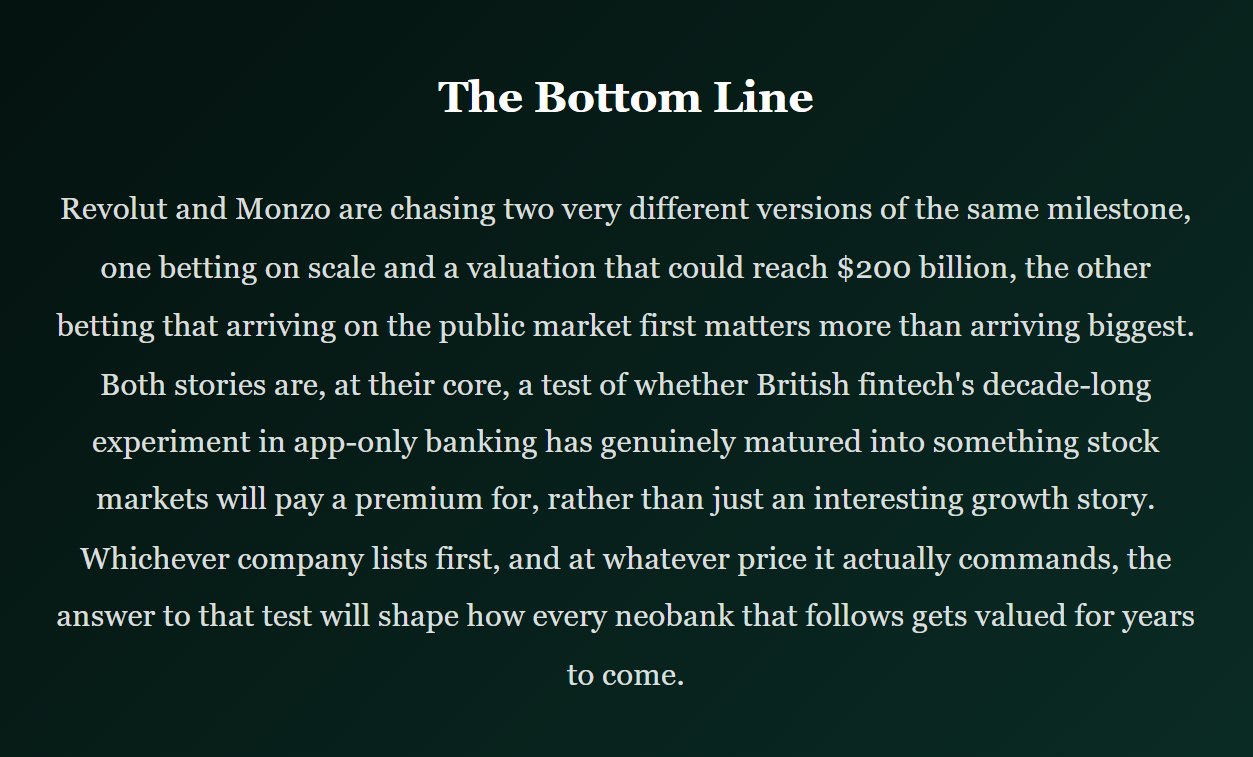
Whichever of the two lists first, and whatever valuation each ultimately commands, the outcome will likely set the benchmark every future European fintech IPO gets measured against for years to come. That's a considerable amount of pressure resting on two companies that, not so long ago, were simply trying to convince people to ditch their high street bank branch.
A note on the numbers
Valuation targets, listing timelines, and venue decisions referenced in this piece are based on reporting and investor estimates as of August 2026, and remain subject to change. This is not financial advice or a recommendation to buy any security; neither company is currently publicly listed.