 William BensonVIEW PROFILE →
The 30-Day Timeline of What Happens When You Cut Out Ultra-Processed Food
Not a diet, not a detox, just a real week-by-week account of what your body and brain actually do when packaged food disappears from the pantry.
Not a diet, not a detox, just a real week-by-week account of what your body and brain actually do when packaged food disappears from the pantry.
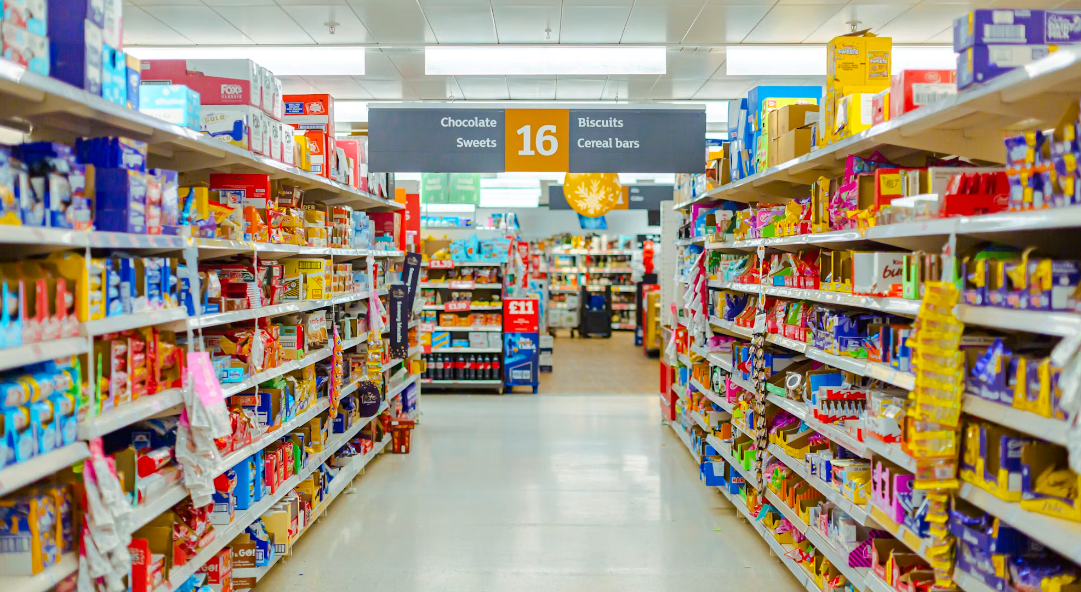
Somewhere between the cereal aisle and the freezer section, most of us are eating food that barely resembles anything a grandparent would recognize as a meal. Ultra-processed food now makes up more than half the average diet in several wealthy countries, quietly stitched into breakfast, lunch, snacks, and dinner without most people ever clocking how much of their plate it actually covers. What happens if you take it out, all of it, for thirty straight days? Not gradually, not "mostly," but genuinely swapped for whole, minimally prepared meals? The answer isn't a single dramatic before-and-after, it's a slow, sometimes uncomfortable, sometimes surprising unfolding that happens in fairly predictable stages. Here's what that month actually tends to look like, week by week. What "Ultra-Processed" Actually Means Before diving into the timeline, it helps to know what's actually being cut. Ultra-processed foods, a category defined by the widely used NOVA food classification system, aren't simply foods that have been processed in some way, nearly everything humans eat involves some processing. What sets this category apart is that these are industrial formulations built mostly from substances extracted from foods, plus additives rarely found in a home kitchen: emulsifiers, flavor enhancers, preservatives, and colorings designed to make a product shelf-stable, intensely palatable, and cheap to produce at scale. Packaged snack cakes, sugary breakfast cereals, most sodas, reconstituted chicken nuggets, flavored yogurts loaded with stabilizers, instant noodle packets, this is the category. Whole foods and minimally processed foods, think vegetables, plain meat, eggs, oats, beans, fresh fruit, sit at the opposite end of that same spectrum.
Week One: The Uncomfortable Adjustment
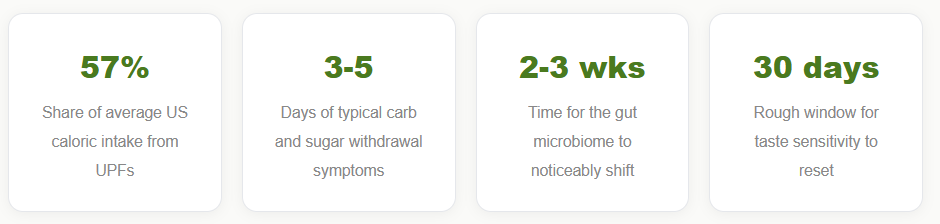
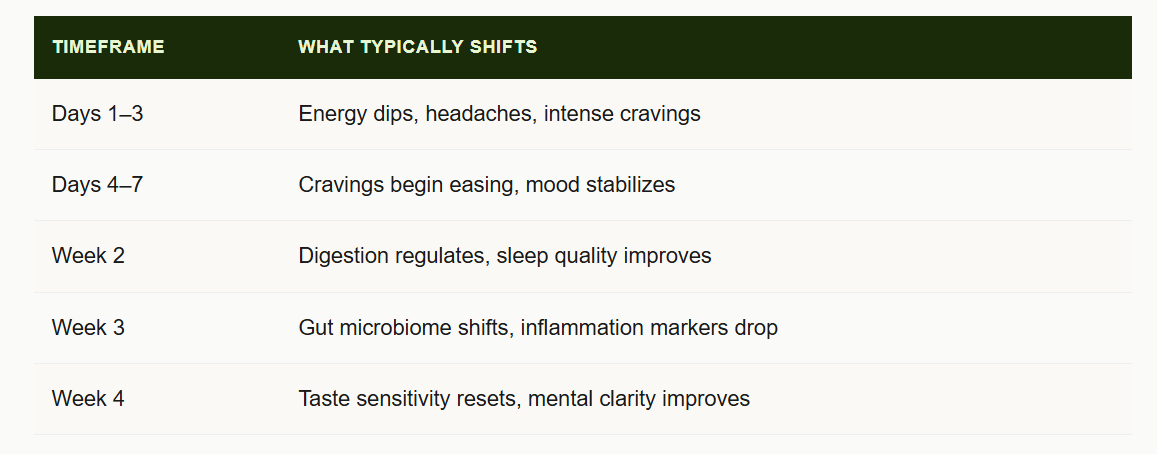
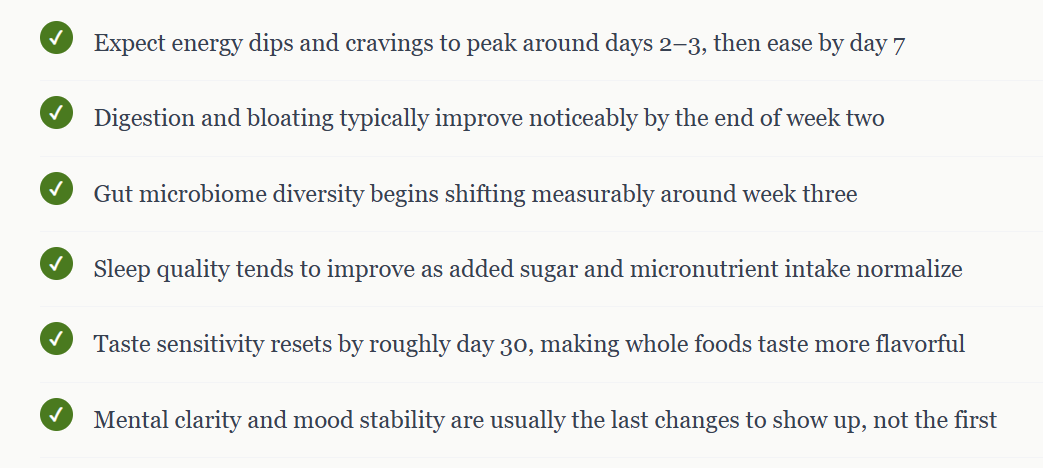
The first few days rarely feel triumphant. Most people report a noticeable dip in energy somewhere around day two or three, along with headaches, irritability, and cravings that can feel disproportionately intense for something as simple as a bag of chips or a candy bar. This isn't a coincidence or a sign of weakness, it's a fairly well-documented pattern that mirrors mild withdrawal from any highly rewarding, engineered stimulus.
Ultra-processed foods are often deliberately engineered to hit what food scientists sometimes call a "bliss point", a precise combination of sugar, fat, and salt calibrated to be maximally rewarding to the brain's dopamine system. Removing that steady stream of hyper-palatable input abruptly can produce something that genuinely resembles withdrawal for the first three to five days, before it starts to ease.
The first week rarely feels like progress, it feels like your body renegotiating what "normal" is supposed to taste and feel like.
Week Two: Sleep and Digestion Start Shifting
By the second week, the acute discomfort of week one generally starts to fade, and a different set of changes begins to show up. Digestive systems, having spent the first several days adjusting to a sharp increase in fiber from vegetables, legumes, and whole grains, tend to settle into a noticeably more regular rhythm. Bloating that felt constant in week one often eases considerably by the end of week two.
Sleep quality is another area where people frequently report change around this point. Ultra-processed diets tend to be higher in added sugar and lower in the magnesium, fiber, and micronutrients found in whole foods, a combination that's been linked in research to more fragmented, lower-quality sleep. As those nutrient levels normalize, many people notice they're falling asleep faster and waking up less frequently through the night.
Why cravings ease faster than expected
Taste preference isn't fixed, it's learned and, importantly, re-learnable. Repeated exposure to intensely sweet or salty engineered foods raises the baseline threshold needed to register something as satisfying. Within roughly two weeks of consistently eating whole foods, that threshold typically starts resetting downward, which is part of why cravings genuinely feel weaker by week two rather than just being willed away.
Week Three: The Gut Microbiome Catches Up
This is where some of the more interesting, less immediately visible changes start happening. The trillions of bacteria living in the gut respond directly to diet, and research comparing whole-food and ultra-processed eating patterns has found measurable shifts in gut microbiome diversity within a matter of weeks. A more diverse, fiber-fed microbiome has been associated in multiple studies with lower systemic inflammation, a factor tied to everything from mood regulation to long-term metabolic health.
Around this same point, many people report a genuine uptick in day-to-day energy that feels different from the temporary sugar-driven spikes that ultra-processed snacks provide. Instead of the familiar mid-afternoon crash that follows a sugary lunch, energy levels tend to feel steadier and more sustained across the day, a pattern consistent with the slower, more even blood sugar response that whole foods, particularly those high in fiber and protein, tend to produce.
Why this isn't the same as "eating clean" marketing
Cutting ultra-processed food isn't about achieving some idealized purity, and it doesn't require expensive specialty products. It's specifically about the degree of industrial formulation, a home-cooked meal made with regular grocery-store ingredients, butter, salt, and all, still counts as whole food under this framework.
Week Four: Mental Clarity and a Reset Palate
By the final stretch, the changes tend to become less physical and more cognitive. A growing body of research has linked diets high in ultra-processed food to increased rates of reported brain fog, difficulty concentrating, and even elevated risk of mood disturbances, likely tied to the same inflammatory pathways affected by gut health. As those markers improve over the course of the month, many people describe a noticeable sharpening of focus and a more stable, even mood by week four.
Taste itself often feels different by this point too. Food that once seemed bland, a plain piece of fruit, an unsalted vegetable, frequently tastes remarkably more flavorful after a month away from intensely engineered flavor profiles. This isn't imagined, it reflects the taste threshold reset mentioned earlier: with the baseline for "satisfying" lowered, ordinary whole foods genuinely register as more flavorful than they did on day one.
What doesn't change in 30 days
It's worth being honest about the limits here too. Thirty days is enough time to notice real shifts in energy, digestion, sleep, and mood, but it's not enough time to meaningfully change body composition in most people, and it shouldn't be framed as a weight-loss protocol. The value of the month lies almost entirely in how it resets taste preferences and reveals, often for the first time, how much of someone's daily discomfort was quietly tied to what had simply become dietary background noise.
Making the Swap Without It Feeling Impossible
The single biggest predictor of whether this kind of month actually sticks isn't willpower, it's preparation. Most ultra-processed food gets eaten not out of preference but out of convenience, when there's nothing else quick available. Batch-cooking a few whole-grain and protein staples at the start of each week tends to remove the exact moment of friction where packaged food usually wins by default.
It also helps to expect the first week to feel harder than the rest. Knowing in advance that headaches, low energy, and strong cravings are a temporary, well-documented phase, rather than a sign that something's going wrong, makes it considerably easier to push through to the part of the month where things actually start to feel better.